

07 May Winter Car AC Demisting
The Secret to Fast Winter Demisting: Why Your Car Needs A/C in the Cold
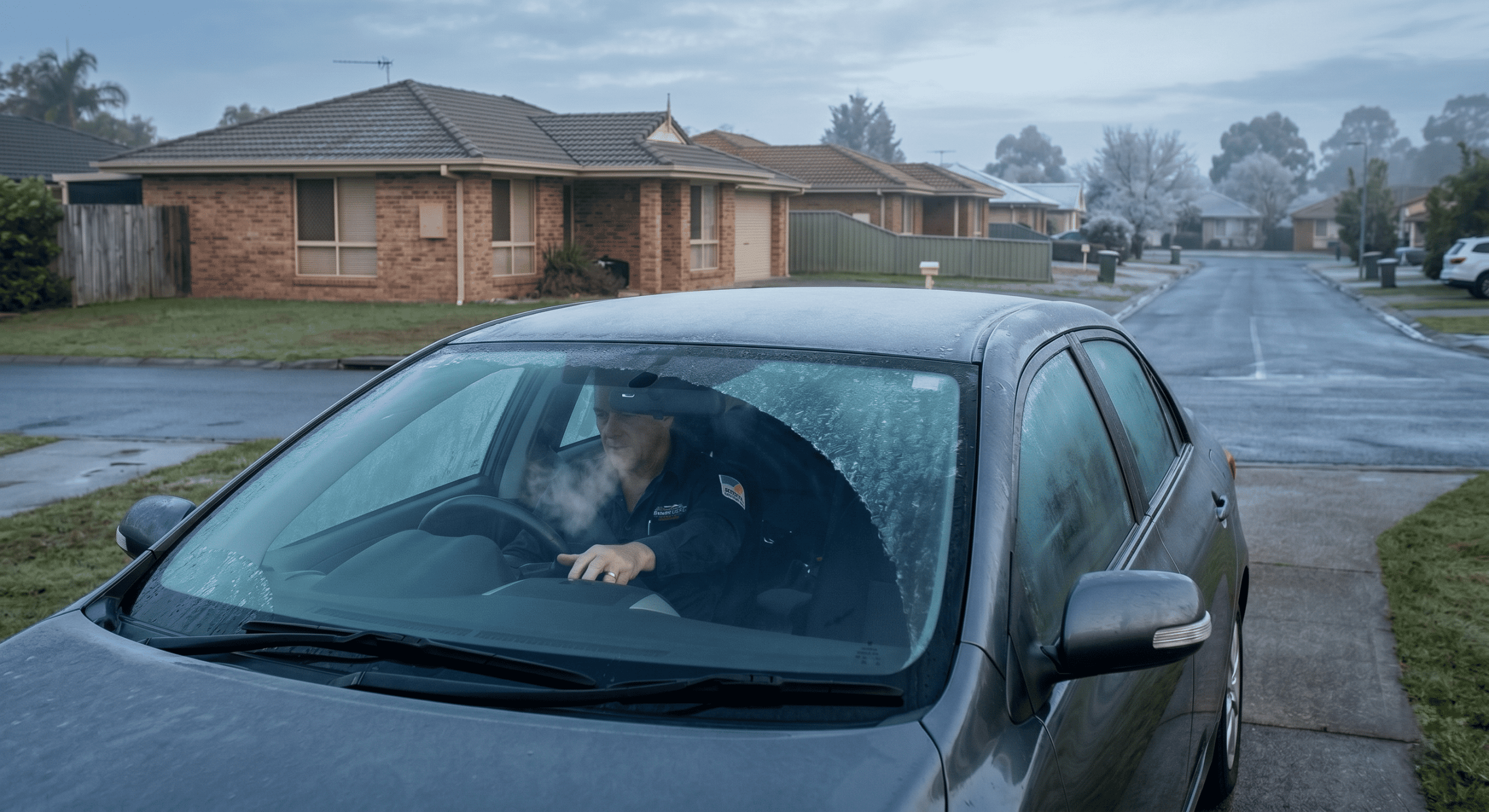
If you are dreading those crisp, chilly mornings sitting in your driveway waiting for a dangerously fogged-up windscreen to clear, you are certainly not alone. Fast and effective winter car ac demisting is a common daily struggle for morning commuters across the Brisbane Bayside and Redland City suburbs.
When you are running late for work or trying to get the kids to school in Capalaba or Cleveland, waiting for visibility to improve feels like an eternity. Most drivers instinctually blast the heater and try to frantically wipe the glass with their sleeve or a dashboard cloth. Unfortunately, this tactic usually just smears the condensation, leaving streaks that turn into blinding glare as soon as you turn into the morning sun.
But there is a much faster, far more effective, and much safer way to clear your view: using your car’s air conditioning system.
Why Your A/C is the Ultimate Demister
It sounds completely counterintuitive to turn on the air conditioning when you are shivering in your seat, but your car’s A/C system does much more than just blow cold air during the summer. Fundamentally, an air conditioning system acts as a powerful, high-speed dehumidifier.
Winter condensation forms inside your car when warm, moist air—created by your natural breath, body heat, and damp clothing or shoes—hits the freezing cold glass of the windscreen. While the car’s heater alone just pushes hot, humid air around the sealed cabin, the air conditioning system actively pulls that trapped moisture out of the air.
As air passes over the freezing cold evaporator core hidden behind your dashboard, the moisture condenses into water droplets and drains safely out beneath your car. Dry air clears condensation on glass incredibly rapidly, leaving your windscreen crystal clear without a single streak.
The 4-Step Method to Clear Your Windscreen Fast
Next time you are faced with a foggy windscreen in Wynnum or Victoria Point, skip the cloth, keep your sleeves dry, and follow these four exact steps to clear your glass in seconds:
-
Turn ON the A/C: Engage the compressor. You must have the A/C button illuminated to start pulling moisture from the cabin air.
-
Turn UP the Heat: The A/C removes the heavy humidity, while your engine’s heater core simultaneously warms that freshly dried air. Hot, dry air will evaporate the stubborn fog on the cold glass faster than any other combination.
-
Turn OFF Recirculate: This is an absolutely crucial step that many drivers forget. Pulling in fresh air from outside is essential. If you leave the climate control system on “recirculate,” you are simply reusing the exact same damp, humid air already trapped inside the car, which will keep your windows perpetually foggy.
-
Direct the Flow: Blast the fan on its absolute highest setting and use the directional controls to force all the air directly up at the windscreen.
The Hidden Costs of Ignoring Your A/C in Winter
Using your A/C for morning demisting isn’t just about driving safety and convenience; it is a critical part of preventative vehicle maintenance that protects your wallet.
An auto air conditioning system operates under a strict “use it or lose it” rule. The system contains highly specific compressor oils that physically travel alongside the refrigerant gas as it pumps through the hoses. This moving oil is what constantly lubricates the internal workings of the compressor and, most importantly, keeps the system’s rubber O-ring seals plump, tight, and flexible.
If you leave the climate control system completely dormant from May all the way through to September, those rubber seals begin to dry out, shrink, and crack. This microscopic shrinkage allows your expensive refrigerant gas (whether it is standard R134a or the newer HFO-1234yf) to slowly leak out into the atmosphere over the winter months. You won’t even notice the leak until the first 30-degree spring day arrives, your vents blow hot air, and you are suddenly facing an expensive regas and repair bill.
To keep everything running smoothly, it is highly recommended to run your A/C for at least 10 to 15 minutes every single week during the off-season. Let it run while you commute, even if you have the temperature dial turned all the way up to hot.
Don’t Forget the Cabin Air Filter
If you are running the A/C and the heater, but the windscreen is still stubbornly foggy or the airflow feels incredibly weak, the culprit might not be your refrigerant. Often, a clogged cabin air filter is to blame. Over the spring and summer, this filter catches dust, pollen, and leaves. By winter, a blocked filter severely restricts the airflow needed to blast away morning condensation. Having this checked and replaced during winter is a quick, inexpensive fix that instantly restores your system’s blowing power and improves the air quality inside your vehicle.
Time for a Winter A/C Health Check?
If your A/C is struggling to demist the windows, making strange noises, or if it simply feels weak, it might be low on refrigerant or in desperate need of a seasonal check-up.
If a leak has developed over the winter, accurate diagnosis is critical. We strictly utilise advanced trace gas leak detection rather than outdated, inaccurate nitrogen testing. Trace gas allows us to pinpoint even the most microscopic seal failures quickly and safely, ensuring we fix the root cause of the leak rather than just topping up the gas.
At Keepin Cool Auto Air Conditioning Specialist, we bring the workshop directly to you. Operating strictly as a fully mobile service since 2006, we come to your home or workplace anywhere in Mount Cotton, the Brisbane Bayside, or the Redland City suburbs. With over 40 years of dedicated industry experience and full ARCtick licensing (AU13448), you can trust that your vehicle’s climate control is in expert hands—keeping your vision clear in the winter and your cabin ice-cold in the summer.