

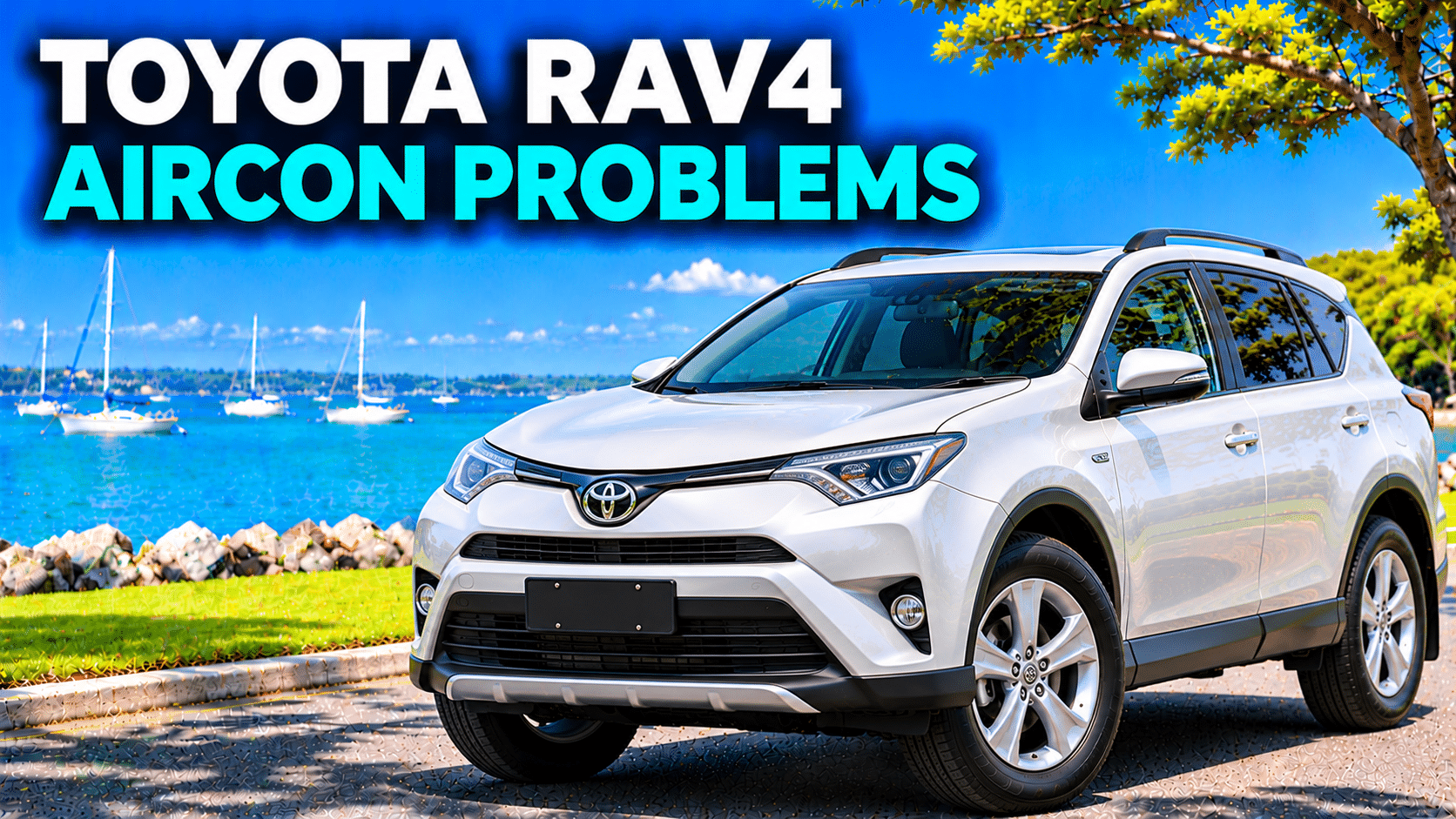
12 Aug Toyota RAV4 Aircon Problems
Toyota RAV4 AC Not Working? Common Aircon Problems & Repairs
Is your Toyota RAV4 air conditioning blowing warm air, cooling intermittently or struggling to stay cold during Brisbane’s summer heat? The cause could be a refrigerant leak, compressor clutch fault, electrical problem, condenser cooling issue or faulty compressor control.
Toyota RAV4 aircon problems vary between generations. Older models can have different compressor and electrical systems from later conventional petrol RAV4s, while hybrid and plug-in hybrid versions require different servicing procedures.
At Keepin Cool Auto Air, we have over 40 years of hands-on automotive air conditioning experience, diagnosing refrigerant leaks, compressor problems and electrical cooling faults.
We provide mobile car air conditioning inspections, professional Trace-A-Gas leak detection, regassing and suitable repairs across Brisbane Bayside and Redland City.
We inspect and leak-test first rather than assuming every Toyota RAV4 blowing warm air needs a regas.
Why Is My Toyota RAV4 Aircon Not Cold?
The way your RAV4 behaves can help identify which components need investigating.
| Toyota RAV4 symptom | Possible cause |
|---|---|
| Blowing warm air with normal airflow | Refrigerant leak, compressor or electrical fault |
| Compressor not engaging | Clutch, relay, wiring or pressure-related protection |
| Aircon works, then stops | Intermittent compressor or electrical control problem |
| Cold while driving, warm at idle | Condenser airflow or cooling fan issue |
| Cooling deteriorates after regassing | Unresolved refrigerant leak |
| Grinding around the compressor | Pulley bearing, clutch or mechanical problem |
| One side cold, the other warm | Temperature-control actuator or refrigeration fault |
| Airflow gradually becomes weak | Evaporator icing or ventilation restriction |
| Passenger carpet becomes wet | Condensation drain or another water-entry problem |
These symptoms provide useful clues, but they don’t confirm the fault.
Professional testing is needed to determine whether the issue involves refrigerant, compressor operation, electrical controls or cabin ventilation.
1. Toyota RAV4 Compressor Clutch Problems
Some older conventional Toyota RAV4 models use an electromagnetic compressor clutch.
When the vehicle requests air conditioning and operating conditions permit, the clutch engages to drive the compressor.
If the magnetic clutch coil fails, or the clutch mechanism becomes worn, cooling may stop.
Signs of a Possible Compressor Clutch Fault
- The cabin blower works but the air remains warm.
- The compressor clutch fails to engage.
- Air conditioning works intermittently.
- Cooling stops after the engine compartment becomes hot.
- Unusual clicking or squealing occurs around the compressor.
- Electrical testing identifies a clutch-related fault.
A failed clutch coil, excessive clutch clearance or worn clutch components may be responsible.
However, a compressor clutch that doesn’t engage is not automatically defective.
Low refrigerant pressure, faulty relays, damaged wiring and compressor-protection controls can also prevent engagement.
Does the Complete Compressor Need Replacing?
Not always.
On some compressor designs, individual clutch components may be serviceable if the compressor remains mechanically sound and suitable parts are available.
If the compressor has internal damage, complete replacement may be the more reliable option.
Our Car AC Compressor Replacement service explains why we investigate the compressor before recommending replacement.
2. RAV4 Compressor Relay, Lock Sensor & Electrical Faults
Toyota RAV4 air conditioning systems use electrical controls to determine when the compressor should operate.
Depending on the vehicle, these may include relays, pressure sensors, compressor rotation monitoring and control-module inputs.
A fault in one of these areas can cause the air conditioning to stop without the compressor itself being mechanically damaged.
What If the RAV4 A/C Light Flashes?
On certain Toyota compressor systems, a flashing A/C indicator can signal abnormal compressor operation.
Some configurations use a compressor lock sensor to monitor whether the compressor is rotating correctly.
On appropriately equipped systems, diagnostic code B1422 relates to the compressor lock-sensor circuit.
Possible areas to investigate include:
- Compressor clutch engagement.
- Lock-sensor electrical signal.
- Wiring and connectors.
- Compressor pulley and drive operation.
- Internal compressor mechanical condition.
A faulty sensor can cause incorrect information to reach the control system.
However, the sensor may also be correctly reporting that a clutch or compressor has stopped operating as expected.
Replacing the sensor or compressor without establishing the cause can result in unnecessary expense.
The correct diagnosis depends on the RAV4’s exact model and air conditioning equipment.
3. Toyota RAV4 Compressor Solenoid & Flow Sensor Faults
Some RAV4 air conditioning systems use electronically controlled compressor designs.
These systems may regulate refrigerant pumping capacity according to cooling demand instead of relying entirely on conventional clutch cycling.
Two components that can be relevant are the compressor control solenoid and refrigerant-flow sensor.
Compressor Solenoid — B1451
On applicable Toyota systems, B1451 relates to a compressor-solenoid circuit fault.
The solenoid helps regulate compressor output.
Possible symptoms include weak cooling, abnormal compressor response or cooling that doesn’t change as expected when the system demands more refrigeration.
However, the fault may involve the solenoid, wiring or associated control circuitry.
Incorrect refrigerant charge and internal compressor problems can also cause weak cooling.
Refrigerant Flow Sensor — B1479
On certain RAV4 systems, B1479 relates to the refrigerant-flow sensor circuit.
The flow sensor provides information about refrigerant circulation to the air conditioning control system.
Testing may involve examining sensor readings, wiring, connectors and relevant control signals.
Depending on the exact compressor design and confirmed failure, repair may require replacement of the compressor assembly.
Why the Exact RAV4 Model Matters
Not every Australian RAV4 uses these sensors or diagnostic codes.
A fault code from one generation should not automatically be applied to another.
At Keepin Cool, we assess the equipment fitted to the individual vehicle before deciding which tests and repairs are appropriate.
For further information, visit our Car AC Inspection & Fault Diagnostics service.
4. Toyota RAV4 Refrigerant Hose Leaks
Refrigerant leakage from a hose or crimped connection is another fault worth investigating.
The compressor discharge hose carries hot, high-pressure refrigerant towards the condenser.
Engine vibration, heat and deterioration around hose connections can contribute to leakage over time.
Symptoms of a Possible Hose Leak
- Air conditioning gradually becoming warmer.
- Cooling deteriorating after previous regassing.
- Refrigerant loss confirmed during testing.
- Oily staining around a hose or fitting.
- Visible deterioration around a crimped connection.
Because compressor oil circulates with the refrigerant, oily residue can help identify a possible leak location.
However, staining alone does not confirm that refrigerant is escaping.
Can a Toyota RAV4 Aircon Hose Be Repaired?
Some refrigerant hoses can be professionally rebuilt using compatible automotive air conditioning hose and suitable crimped fittings.
Other assemblies require complete replacement because of their construction, damaged pipework or unsuitable connections.
We identify the leak and inspect the assembly before recommending repair or replacement.
Learn more about our Car AC Hose Repairs service.
5. Toyota RAV4 Condenser Refrigerant Leaks
The air conditioning condenser sits towards the front of the vehicle, where airflow removes heat from the refrigerant.
Its exposed location makes it vulnerable to stones, road debris, corrosion and physical damage.
A small puncture can allow refrigerant to escape gradually.
Possible signs include:
- Cooling performance getting progressively worse.
- Refrigerant loss after previous servicing.
- Oily staining around condenser tubes.
- Visible impact damage near the front grille.
- Refrigerant leakage confirmed during testing.
A condenser leak can produce symptoms similar to a leaking hose or compressor seal.
We use professional Car AC Leak Detection, including Trace-A-Gas testing where appropriate, to help establish the source before ordering replacement parts.
A leaking condenser core generally requires replacement.
6. Toyota RAV4 Aircon Cold While Driving but Warm at Idle
Does your RAV4 cool properly on the motorway but become warm when stopped at traffic lights?
One possibility is inadequate condenser airflow.
When the vehicle moves, outside air passes through the condenser and helps remove heat.
When stationary, the cooling fan system becomes particularly important.
Possible causes include:
- Cooling fan motor or electrical control faults.
- Condenser airflow restricted by dirt or debris.
- Incorrect refrigerant charge.
- Excessive refrigerant-system pressure.
- Reduced compressor performance.
A cooling fan that isn’t operating correctly may allow refrigerant pressure to rise and cooling performance to fall.
However, warm air at idle doesn’t automatically mean the fan has failed.
Checking the cooling fan operation, refrigerant pressures and compressor performance together helps establish the actual cause.
If the engine temperature also rises while stationary, the engine cooling system needs prompt attention.
7. RAV4 Aircon Works, Then Stops Cooling
Intermittent air conditioning can be difficult to diagnose because the system may work normally when first started.
Some RAV4 owners notice cooling becomes weak or stops after driving for a while.
Others experience the problem only during particularly hot weather.
Possible causes include intermittent clutch operation, compressor-control faults, electrical connections, refrigerant pressure problems and evaporator icing.
Strong Airflow but Suddenly Warm Air
If the dashboard blower continues pushing a normal amount of air but cooling stops, compressor operation, electrical controls and refrigerant pressures become important areas to investigate.
Airflow Gradually Becomes Weak
If the blower can still be heard running but less air reaches the vents, evaporator icing or another ventilation restriction may be responsible.
Ice can accumulate on the evaporator fins and restrict airflow.
Switching the air conditioning off may allow the ice to melt and airflow to return.
Possible contributing factors include temperature-sensor problems, refrigerant-flow conditions and restricted airflow.
The difference between losing cooling and losing airflow is a valuable diagnostic clue.
8. Toyota RAV4 Evaporator Leaks
The evaporator is located inside the dashboard’s heating and ventilation housing.
As refrigerant passes through it, the evaporator absorbs heat from cabin air.
An evaporator can develop refrigerant leakage through the core or its connections.
Possible warning signs include:
- Gradual loss of cooling performance.
- Refrigerant loss confirmed during testing.
- No detectable leak around accessible hoses or condenser fittings.
- Cooling repeatedly becoming weak after regassing.
- Specialist leak testing indicating a concealed leak.
Because the evaporator is enclosed inside the ventilation housing, replacement may require considerable dashboard dismantling.
However, an evaporator leak should not be assumed just because the vehicle has lost refrigerant.
Professional leak detection helps determine whether the fault is inside the cabin cooling unit or elsewhere.
Keepin Cool provides suitable mobile leak diagnosis and can advise when extensive dashboard repairs require workshop arrangements.
9. Toyota RAV4 Water Leaking Into the Passenger Footwell
Water on the passenger-side carpet is a different problem from refrigerant escaping from the air conditioning system.
During normal operation, the evaporator removes moisture from cabin air.
This condensation should drain outside the vehicle through a dedicated drain.
If the drain becomes blocked, damaged or disconnected, water may collect inside the cabin.
Signs of a Condensation Drain Problem
- Damp passenger-side carpet.
- Water appearing after using the air conditioning.
- Musty smells inside the cabin.
- Moisture collecting beneath the dashboard.
- Air conditioning still cooling normally.
However, wet carpets can also result from windscreen seals, body drainage problems or other water-entry faults.
Does Wet Carpet Mean the RAV4 Evaporator Is Leaking?
Not necessarily.
A blocked condensation drain involves liquid water produced by normal dehumidification.
A refrigerant leak involves refrigerant escaping from the sealed cooling circuit.
Wet carpet alone is not evidence of a leaking refrigerant evaporator or a need for regassing.
Keepin Cool focuses on automotive air conditioning refrigeration systems. Extensive interior water-ingress or drain repairs may require an appropriate workshop.
10. RAV4 Weak Airflow, Cabin Filters & Climate Controls
Sometimes the air conditioning system produces cold air but the cabin doesn’t receive enough airflow.
This can be caused by a ventilation problem rather than refrigerant loss.
Blocked Cabin Filter
A heavily contaminated cabin filter can restrict airflow and reduce cooling effectiveness.
Other symptoms may include weak windscreen demisting and increased blower noise.
If the filter is clean but airflow remains weak, the blower motor, fan controller or ventilation doors may need investigating.
One Side Cold and the Other Warm
On RAV4 variants with suitable multi-zone climate-control equipment, an air-mix door or actuator may fail to deliver the selected temperature.
This can cause one side of the cabin to remain warm while the other feels cold.
However, insufficient refrigerant-system performance can sometimes create uneven cooling too.
The refrigeration system and climate controls should both be assessed before replacing dashboard components.
Musty or Unusual Aircon Smells
An unpleasant smell from the ventilation system may be caused by accumulated moisture, a contaminated cabin filter or organic material inside the ventilation housing.
A musty smell alone doesn’t establish that refrigerant is leaking.
A regas won’t repair a blocked cabin filter, faulty blower motor or ordinary ventilation odour.
Toyota RAV4 Aircon Problems by Model Generation
The exact compressor design, refrigerant and electrical controls vary between RAV4 generations.
| RAV4 generation | Important considerations |
|---|---|
| Older conventional petrol RAV4s | Compressor clutch operation, relays, hoses and refrigerant leaks |
| 2006–2012 models | Compressor electrical controls, clutch or sensor circuits according to specification |
| 2013–2018 models | Refrigerant-system diagnosis, compressor-control differences, condenser and ventilation faults |
| 2019–2025 conventional petrol variants | Cooling performance, electronic controls and exact compressor configuration |
| Hybrid and plug-in hybrid RAV4s | Different electrical and compressor servicing requirements; outside our current service range |
These are diagnostic considerations, not claims that every vehicle in a particular generation develops the same failure.
Toyota RAV4 Hybrid & Plug-In Hybrid Models
Toyota Australia discontinued new orders for petrol-only RAV4 variants in June 2024.
The sixth-generation RAV4 arrived in Australia in April 2026 with hybrid-electric powertrains, followed by plug-in hybrid models.
These vehicles can require different air conditioning compressor, electrical safety and lubricant procedures.
Keepin Cool services suitable conventional petrol RAV4 vehicles only. We do not undertake hybrid, plug-in hybrid or electric-vehicle air conditioning work.
If you’re unsure which version you own, please provide the year and full variant when enquiring.
For broader model information, read our Toyota Air Con Problems guide.
How We Diagnose Toyota RAV4 Aircon Problems
At Keepin Cool, our approach is to identify the actual problem before recommending a regas or replacement parts.
Depending on the RAV4 model and complaint, our inspection may include:
- Cooling performance: Checking vent temperatures and cabin airflow.
- Refrigerant-system assessment: Evaluating operating pressures and cooling behaviour.
- Leak detection: Inspecting hoses, condensers, connections and suspected evaporator locations.
- Compressor testing: Assessing clutch operation or electronic compressor controls, where applicable.
- Electrical diagnosis: Investigating relays, wiring, sensors and relevant control signals.
- Condenser airflow: Checking cooling fan operation and airflow restrictions.
- Repair recommendations: Explaining the findings and quoting suitable work before proceeding.
We use professional Trace-A-Gas leak detection where appropriate to help locate escaping refrigerant.
Our Car Air Conditioner Repairs service covers suitable compressor, refrigerant hose and other automotive air conditioning faults.
Does Your Toyota RAV4 Need an Aircon Regas?
A Toyota RAV4 blowing warm air doesn’t automatically require additional refrigerant.
If refrigerant has escaped from a leaking hose, condenser, evaporator or another component, the problem should be investigated before recharging.
Similarly, a compressor clutch, electronic control or cooling fan problem won’t necessarily be repaired by adding refrigerant.
When the vehicle passes inspection and is suitable for regassing, we recover existing refrigerant where applicable, evacuate and check the system, then recharge with the manufacturer’s specified refrigerant type and quantity by weight.
Appropriate compressor oil and UV dye are included when regassing, followed by final cooling-performance checks.
Many older conventional petrol RAV4s use R134a, but the correct refrigerant and charge quantity must always be confirmed from the vehicle’s label and approved specifications.
Learn more about our R134a Car Aircon Regas and HFO-R1234yf Car Aircon Regas services for eligible vehicles.
How Much Do Toyota RAV4 Aircon Repairs Cost?
The cost depends on the confirmed fault, vehicle specification, replacement components and labour required.
A faulty relay, leaking refrigerant hose and mechanically damaged compressor involve different repairs.
We inspect the system first, explain what we’ve found and provide a quote before suitable additional work proceeds.
If a regas is successfully completed, the initial inspection and appropriate leak checks are included in that service.
If a fault prevents regassing and you choose not to proceed with required repairs, the applicable inspection fee applies instead.
For our complete service pricing, visit Car Air Conditioning Prices Brisbane.
Frequently Asked Questions About Toyota RAV4 Aircon Problems
Why is my Toyota RAV4 aircon blowing hot air?
Possible causes include refrigerant leaks, compressor faults, electrical problems, condenser airflow issues or climate-control faults. Testing is needed to identify the actual problem.
Why won’t my RAV4 air conditioning compressor engage?
On clutch-equipped systems, a faulty clutch coil, relay, wiring problem or refrigerant-pressure protection may be responsible. Other compressor designs require different testing.
What does RAV4 aircon code B1451 mean?
On appropriately equipped Toyota systems, B1451 relates to the compressor-solenoid circuit. The solenoid, wiring and control system may require investigation.
What does RAV4 fault code B1479 mean?
On applicable systems, B1479 relates to the refrigerant-flow sensor circuit. It requires testing and doesn’t automatically confirm internal compressor failure.
Why is my RAV4 aircon cold while driving but warm at idle?
Inadequate condenser airflow, cooling fan problems, refrigerant charge or compressor performance may be involved.
Can a leaking Toyota RAV4 aircon hose be repaired?
Some hose assemblies can be professionally repaired with compatible refrigerant hose and fittings. Others require replacement depending on their construction and condition.
Why does my RAV4 aircon stop cooling after driving?
Intermittent compressor operation, electrical faults, pressure-control problems or evaporator icing may be responsible. Changes in airflow can help guide diagnosis.
Why is the passenger carpet wet after using the aircon?
A blocked or disconnected condensation drain is one possibility. Other sources of water ingress should also be considered. Wet carpet doesn’t automatically indicate a refrigerant leak.
Can Keepin Cool service my RAV4 Hybrid?
No. Keepin Cool currently services suitable conventional petrol RAV4 models only, not hybrid or plug-in hybrid versions.
Can you inspect my Toyota RAV4 at home?
Yes. We provide mobile air conditioning inspections, refrigerant leak detection, regassing and suitable repairs for eligible conventional RAV4s across Brisbane Bayside and Redland City.
Mobile Toyota RAV4 Aircon Repairs — Brisbane Bayside & Redland City
Keepin Cool Auto Air provides mobile car air conditioning diagnosis, professional leak detection, regassing and suitable repairs across Brisbane Bayside and Redland City.
Our regular service area includes Cleveland, Capalaba, Alexandra Hills, Birkdale, Wellington Point, Ormiston, Thornlands, Victoria Point, Redland Bay, Mount Cotton, Wynnum, Manly, Lota and Tingalpa.
We service suitable conventional vehicles from 1999 onwards and confirm vehicle and job suitability before booking.
With 40+ years of automotive air conditioning experience, Keepin Cool offers:
- Owner-operated mobile service.
- Professional Trace-A-Gas leak detection.
- Compressor clutch and electrical fault diagnosis.
- Suitable refrigerant hose repairs.
- R134a and HFO-R1234yf servicing for eligible vehicles.
- Clear repair explanations and quotations.
- ARCtick authorisation AU13448.
You can verify our authorisation through the official ARCtick Business Search.
For more information about local coverage, visit our Brisbane Bayside Car Air Conditioning and Redland City Car Air Conditioning pages.
Book Your Toyota RAV4 Aircon Inspection
If your Toyota RAV4 air conditioning is blowing warm air, losing refrigerant or failing to cool properly, Keepin Cool Auto Air can investigate the problem and recommend suitable repairs.
Call or SMS Jamie on 0415 761 019, or use the existing Quick SMS Quote button on our website.
Please include your suburb, Toyota RAV4 model year, petrol or hybrid variant, and a brief description of the cooling problem.
Keepin Cool Auto Air Conditioning Specialist
100% Mobile | ARCtick AU13448 | 40+ Years Experience