

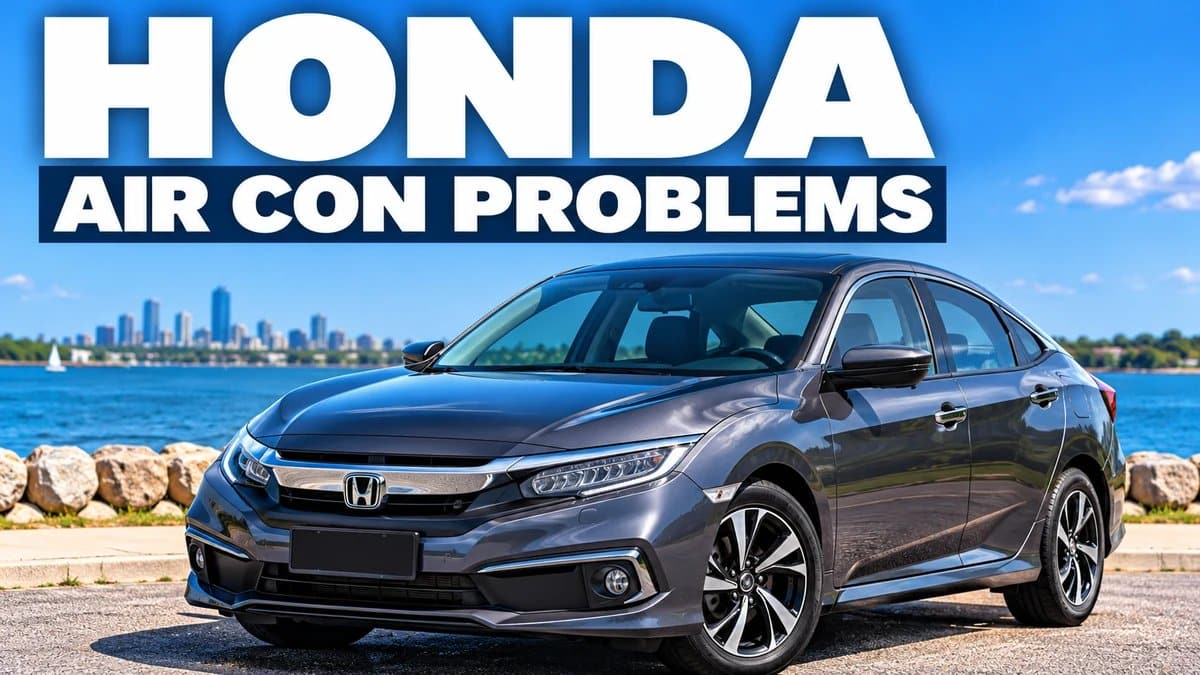
24 Jun Honda Air Con Problems
Honda Air Conditioning Not Working? Common Faults & Repairs
Is your Honda air conditioning blowing warm air, cooling intermittently or no longer working properly? Whether you drive a Honda Civic, Jazz, Accord, HR-V or CR-V, the cause could be a refrigerant leak, compressor fault, electrical problem or inadequate condenser airflow.
Honda air con problems vary between models and generations. An older Jazz with an electromagnetic compressor clutch requires different diagnostic checks from a later Civic with more sophisticated climate-control equipment.
At Keepin Cool Auto Air, we have over 40 years of hands-on automotive air conditioning experience, diagnosing compressor faults, refrigerant leaks and electrical cooling problems.
We provide mobile air conditioning inspections, professional Trace-A-Gas leak detection, regassing and suitable repairs across Brisbane Bayside and Redland City.
We inspect and leak-test first rather than assuming every Honda blowing warm air needs a regas.
Why Is My Honda Aircon Not Cold?
The way your air conditioning behaves provides useful clues about the fault.
| Honda aircon symptom | Possible cause |
|---|---|
| Warm air with normal blower airflow | Refrigerant leak, compressor or electrical fault |
| AC stops working after driving | Intermittent compressor clutch, relay or sensor problem |
| Cold while driving, warm at idle | Condenser airflow or cooling fan problem |
| Cooling fades after a previous regas | Unresolved refrigerant leak |
| Compressor does not engage | Clutch coil, relay, wiring or system protection |
| Grinding near the compressor | Pulley bearing or internal compressor problem |
| One side cold and the other warm | Temperature-control or refrigerant-system issue |
| Very weak airflow | Cabin filter, blower or evaporator icing |
These are possible causes rather than confirmed diagnoses.
The correct repair depends on the Honda model, year, compressor type and results of professional testing.
1. Honda Civic Aircon Condenser Leaks
A leaking condenser is an important fault to investigate when a Honda Civic gradually loses cooling performance.
The condenser is positioned towards the front of the vehicle, where it removes heat from the refrigerant as air passes across its fins.
This exposed location makes it vulnerable to corrosion, stone damage and physical deterioration.
Some tenth-generation Civic vehicles have also been associated with condenser leakage concerns in overseas technical information.
However, this does not establish that every Australian-delivered Civic develops the same fault.
Signs of a Possible Honda Civic Condenser Leak
- Air conditioning gradually becomes warmer.
- Refrigerant loss is confirmed during inspection.
- Cooling temporarily improves following previous regassing.
- Oily staining appears around condenser tubes or connections.
- Small punctures, corrosion or damage are visible.
- Professional testing confirms escaping refrigerant.
Because compressor oil circulates with the refrigerant, oily residue can indicate a possible leak.
However, staining alone doesn’t confirm that the condenser is leaking.
Should the Condenser Be Replaced?
If testing establishes that the condenser core is leaking, replacement is generally the most reliable repair.
A leaking pipe connection or seal may require a different repair.
Our Car AC Leak Detection service uses professional methods, including Trace-A-Gas testing where appropriate, to identify refrigerant leaks before replacement parts are recommended.
2. Honda Civic Compressor Shaft-Seal Leaks
Another potential cause of refrigerant loss is leakage around the air conditioning compressor shaft seal.
On applicable compressor designs, the shaft seal helps prevent refrigerant and compressor oil escaping where the rotating shaft passes through the compressor housing.
A worn or damaged seal can allow refrigerant to escape gradually.
Possible Symptoms
- Air conditioning slowly loses cooling performance.
- Refrigerant loss is confirmed.
- Oily residue appears near the compressor shaft or clutch.
- Cooling becomes weak again after servicing.
- Specialist leak testing detects leakage at the compressor.
A leaking shaft seal is not necessarily the same as internal compressor failure.
Some compressor designs allow separate seal repairs, but the suitability depends on component condition, parts availability and the exact compressor fitted.
A compressor should not automatically be replaced simply because refrigerant is escaping near its front housing.
At Keepin Cool, we investigate the source of leakage and mechanical condition before recommending repair or replacement.
3. Honda Jazz Air Conditioning Problems
Honda Jazz owners can experience several different air conditioning faults, including compressor clutch problems, electrical relay failures, condenser fan faults and refrigerant leaks.
These faults can create similar symptoms but require different repairs.
Honda Jazz Compressor Clutch Not Engaging
On Jazz models fitted with an electromagnetic compressor clutch, the clutch engages when cooling is requested and operating conditions permit.
If the clutch coil fails, the compressor may not operate even though the AC button is switched on.
Possible causes include:
- Defective compressor clutch coil.
- Faulty compressor clutch relay.
- Wiring or connector problems.
- Refrigerant pressure outside operating limits.
- Electrical control-system faults.
- Mechanical compressor damage.
Honda Jazz service information includes separate diagnostic procedures for the clutch circuit, condenser fan and pressure-control system.
This distinction is important.
A Honda Jazz compressor that doesn’t engage isn’t automatically defective.
A relay or wiring fault may prevent an otherwise serviceable compressor from operating.
Honda Jazz Aircon Cold While Driving but Warm at Idle
When a Jazz cools reasonably well while moving but struggles in traffic, condenser airflow should be investigated.
The vehicle relies on its cooling fan arrangement to move air through the condenser when stationary.
A defective fan motor, electrical relay or control circuit can reduce cooling performance.
However, incorrect refrigerant charge and compressor faults can produce similar symptoms.
Checking actual fan operation and refrigerant pressures helps establish the cause.
4. Honda CR-V Compressor Problems
Some Honda CR-V models have experienced significant compressor-related faults.
An internally damaged compressor can produce more than just warm air.
If mechanical components break down, metal particles and contaminated oil may circulate through the refrigerant system.
This can affect other components and make the repair more involved.
Signs of Possible Internal Compressor Damage
- Grinding or rattling noises near the compressor.
- Sudden loss of cooling.
- Abnormal refrigerant-system pressures.
- Compressor seizure or mechanical resistance.
- Metallic debris discovered during inspection.
- Contaminated compressor oil.
Automotive technicians sometimes refer to severe compressor contamination as AC black death.
However, not every CR-V that stops cooling has suffered major compressor failure.
A failed clutch, leaking condenser, electrical relay or refrigerant leak can produce similar symptoms.
Why Correct Diagnosis Matters
Replacing a compressor without checking for contamination may leave damaging debris inside the system.
Depending on the failure, additional components such as the condenser, receiver-drier or expansion valve may require attention.
Other compressor-related problems, including clutch wear or shaft-seal leakage, may involve different repairs.
For the detailed model-specific explanation, read our Honda CR-V Aircon Problems guide.
Our Car AC Compressor Replacement service explains why the complete system needs assessment before major repairs are recommended.
5. Honda HR-V Aircon Problems
Honda HR-V air conditioning problems can involve condenser leaks, compressor operation, electrical controls or ventilation faults.
The condenser is worth inspecting when refrigerant loss is confirmed because of its exposed position near the front of the vehicle.
Potential leak locations include:
- Condenser tubes and connections.
- Refrigerant pipe fittings.
- Compressor seals.
- Service valve connections.
- Other accessible refrigerant components.
An oily mark on a condenser does not automatically prove refrigerant leakage.
Professional testing is necessary before replacement.
Honda HR-V Petrol and Hybrid Differences
Honda has sold conventional petrol and hybrid HR-V variants in Australia.
Hybrid air conditioning equipment can differ from conventional petrol systems, particularly where electrically driven compressors and specialised lubricants are used.
Keepin Cool currently services suitable conventional petrol HR-V models only.
We do not undertake hybrid or electric-vehicle air conditioning work.
Please provide the exact model and year when requesting an inspection.
6. Honda Accord Air Conditioning Problems
Honda Accord air conditioning systems can develop refrigerant leaks, compressor faults and electronic climate-control problems.
Some models have multi-zone climate control, allowing different temperatures to be selected for the driver and passenger.
If the air conditioning is cold on one side but warm on the other, possible causes include:
- Air-mix door or actuator faults.
- Incorrect temperature-sensor information.
- Electrical climate-control problems.
- Reduced refrigerant-system performance.
A defective actuator may prevent the ventilation system from directing air through the appropriate heating and cooling sections.
However, low refrigerant charge can also contribute to uneven temperatures.
The overall cooling system should be checked before replacing dashboard components.
7. Honda Compressor Clutch and Relay Faults
Many older Honda air conditioning systems use a magnetic compressor clutch.
When operating correctly, the clutch engages the compressor so refrigerant can circulate.
If the clutch coil fails, the compressor may stop operating.
However, the same symptom can occur if the clutch relay, fuse, wiring or control system fails.
Signs of a Possible Electrical Fault
- Air conditioning suddenly stops cooling.
- The cabin blower continues operating.
- The compressor clutch fails to engage.
- Cooling works intermittently.
- The fault appears after the engine becomes hot.
- The system sometimes works again after restarting.
A faulty relay may be simpler to repair than a mechanically damaged compressor, but it shouldn’t be replaced without testing.
Professional diagnosis may involve checking the clutch command, electrical supply, relay operation and pressure-related protection.
Our Car AC Inspection & Fault Diagnostics service investigates these faults before unnecessary replacement parts are recommended.
8. Honda Aircon Cold While Driving but Warm at Idle
Does your Honda produce cold air on the highway but become warm at traffic lights?
Inadequate condenser airflow is one possible cause.
At road speed, natural airflow helps remove heat from the refrigerant.
When the vehicle is stationary, the cooling fan system becomes particularly important.
Possible causes include:
- Condenser fan not operating correctly.
- Cooling fan relay or electrical problems.
- Dirt or debris restricting condenser airflow.
- Incorrect refrigerant charge.
- Excessively high refrigerant pressure.
- Reduced compressor performance.
If the cooling fan isn’t operating properly, refrigerant pressures may rise and cooling performance may fall.
However, a warm-air-at-idle complaint doesn’t automatically mean the fan is defective.
Checking fan operation, operating pressures and vent temperatures together helps identify the actual cause.
If engine temperature also rises, the engine cooling system requires attention.
9. Honda Aircon Works, Then Stops Cooling
Some Honda air conditioning faults occur only after the vehicle has been running for a while.
A Civic, Jazz or CR-V may cool normally when first started but begin blowing warm air later.
Possible causes include intermittent compressor clutch engagement, electrical wiring problems, refrigerant pressure protection and evaporator icing.
Airflow Remains Strong but Suddenly Becomes Warm
If the blower continues pushing a normal amount of air but cooling stops, compressor operation, electrical controls and refrigerant-system performance are important areas to investigate.
Airflow Gradually Becomes Weaker
If the blower can still be heard running but less air reaches the dashboard vents, evaporator icing or another ventilation restriction may be responsible.
Ice can build up on the evaporator fins and restrict airflow.
After the air conditioning is switched off, the ice may melt and airflow can return.
Possible contributing factors include temperature-sensor problems, refrigerant-flow conditions and restricted cabin airflow.
Knowing whether your Honda loses cooling or loses airflow can make diagnosis more effective.
10. Honda Evaporator Leaks and Cabin Airflow Problems
The evaporator is located inside the dashboard’s heating and ventilation housing.
It absorbs heat from the cabin air as refrigerant circulates through the cooling system.
Like other refrigerant components, an evaporator can eventually develop leakage.
Possible warning signs include:
- Gradually deteriorating cooling.
- Confirmed refrigerant loss.
- Cooling failing again after previous regassing.
- No obvious leak around accessible external components.
- Specialist testing suggesting leakage within the ventilation housing.
Because an evaporator is hidden behind dashboard components, confirming a leak can require additional investigation.
Replacement may also involve substantial interior dismantling.
This is why the evaporator should not be replaced based solely on warm-air symptoms.
Weak Airflow or Musty Smells
Not every cooling complaint involves refrigerant loss.
A contaminated cabin filter, faulty blower motor or ventilation problem can restrict airflow.
Musty smells may be associated with moisture or contamination inside the ventilation system rather than refrigerant leakage.
A regas will not repair a blocked filter, defective blower motor or ordinary ventilation odour.
How We Diagnose Honda Air Conditioning Problems
At Keepin Cool, the aim is to establish why the system isn’t cooling before recommending repairs.
Depending on the model and complaint, our inspection may involve:
- Cooling performance assessment: Check vent temperatures, airflow and operating conditions.
- Compressor testing: Assess clutch engagement, mechanical condition and relevant controls.
- Electrical diagnosis: Investigate relays, wiring, sensors and control signals.
- Refrigerant-system checks: Assess system pressures and performance.
- Leak detection: Inspect condensers, hoses, seals and other suspected leak locations.
- Condenser airflow: Check cooling fan operation where relevant.
- Repair recommendation: Explain the findings and quote suitable repairs before proceeding.
We use professional Trace-A-Gas leak detection where appropriate to help locate escaping refrigerant.
The priority is to avoid repeated regassing, unnecessary compressor replacement and repairs that fail to address the original problem.
For further information, see our Car Air Conditioner Repairs service.
Does Your Honda Need an Aircon Regas?
A Honda blowing warm air doesn’t automatically need more refrigerant.
If refrigerant has escaped through a leaking condenser, hose, compressor seal or evaporator, the source should be investigated before recharging.
Likewise, an electrical relay or compressor clutch problem will not necessarily be corrected by adding refrigerant.
When a system passes inspection and is suitable for regassing, we recover existing refrigerant where applicable, evacuate and check the system, then recharge it with the manufacturer’s specified refrigerant type and quantity by weight.
Appropriate compressor oil and UV dye are included when regassing, followed by final cooling-performance checks.
Does My Honda Use R134a or HFO-R1234yf?
The refrigerant depends on the particular Honda model, production year and specifications.
Many older conventional Hondas use R134a, while some later vehicles use HFO-R1234yf.
These refrigerants are not interchangeable.
We confirm the identification label and technical specifications before servicing.
Read more about our R134a Car Aircon Regas and HFO-R1234yf Car Aircon Regas services for eligible vehicles.
How Much Do Honda Aircon Repairs Cost?
Repair costs depend on the confirmed fault, Honda model, refrigerant specification and replacement components required.
A failed electrical relay, leaking condenser and mechanically damaged compressor can involve very different repairs.
We inspect the system first, explain the findings and provide a quote before additional work proceeds.
If the system passes inspection and is successfully regassed, the initial inspection and appropriate leak checks are included in that service.
If a fault prevents regassing and you decide not to proceed with the required repairs, the applicable inspection fee applies instead.
For our complete service pricing, visit Car Air Conditioning Prices Brisbane.
Frequently Asked Questions About Honda Air Con Problems
Why is my Honda air conditioning blowing hot air?
Possible causes include refrigerant leaks, faulty compressor clutches, damaged condensers, electrical relays and cooling fan problems. Testing is needed to identify the actual fault.
Why is my Honda Civic aircon not cold?
A condenser leak, compressor shaft-seal leak, electrical fault or compressor problem may be responsible. The symptoms alone don’t identify the cause.
Why does my Honda Jazz aircon stop working?
Possible causes include compressor clutch, electrical relay, pressure-control or cooling fan problems. Checking the correct electrical circuits and refrigerant conditions helps distinguish them.
Can a Honda compressor clutch be repaired separately?
Sometimes. Certain compressor designs have serviceable clutch components. The correct repair depends on parts availability and whether the compressor remains mechanically sound.
What happens when a Honda CR-V compressor fails internally?
Severe damage can circulate metal debris and contaminated oil through the refrigerant system. Additional cleaning or component replacement may be required.
Why is my Honda aircon cold while driving but warm at idle?
Insufficient condenser airflow, cooling fan problems, refrigerant charge or compressor performance may be responsible.
Why does my Honda aircon work for 20 minutes and then stop?
Intermittent compressor operation, electrical faults, pressure-control problems or evaporator icing may be involved. Whether airflow stays strong or gradually weakens provides an important clue.
Does my Honda need regassing every two years?
Not automatically. Periodic air conditioning inspections can be useful, but refrigerant recharge should be based on the system’s condition and results of appropriate testing.
Can Keepin Cool service my Honda Hybrid?
No. We currently service suitable conventional petrol and diesel vehicles only, not hybrids or electric vehicles.
Can you inspect my Honda aircon at home?
Yes. Keepin Cool provides mobile air conditioning inspections, refrigerant leak detection, regassing and suitable repairs for eligible Honda vehicles across Brisbane Bayside and Redland City.
Mobile Honda Air Conditioning Repairs — Brisbane Bayside & Redland City
Keepin Cool Auto Air provides mobile automotive air conditioning inspections, professional leak detection, regassing and suitable repairs throughout Brisbane Bayside and Redland City.
Our regular service areas include Cleveland, Capalaba, Alexandra Hills, Birkdale, Wellington Point, Ormiston, Thornlands, Victoria Point, Redland Bay, Mount Cotton, Wynnum, Manly, Lota and Tingalpa.
We service suitable conventional vehicles from 1999 onwards and confirm vehicle and job suitability before booking.
With 40+ years of automotive air conditioning experience, Keepin Cool offers:
- Owner-operated mobile service.
- Professional Trace-A-Gas leak detection.
- Compressor clutch and electrical fault diagnosis.
- Suitable refrigerant hose and component repairs.
- R134a and HFO-R1234yf servicing for eligible vehicles.
- Clear explanations before additional repairs.
- ARCtick authorisation AU13448.
You can verify our authorisation through the official ARCtick Business Search.
For more information about our local coverage, visit our Brisbane Bayside Car Air Conditioning and Redland City Car Air Conditioning pages.
Book Your Honda Aircon Inspection
If your Honda Civic, Jazz, Accord, HR-V or CR-V is blowing warm air, losing refrigerant or cooling intermittently, Keepin Cool Auto Air can investigate the problem and explain suitable repair options.
Call or SMS Jamie on 0415 761 019, or use the existing Quick SMS Quote button on our website.
Please include your suburb, Honda model and year, whether it’s petrol, diesel or hybrid, and a brief description of the cooling problem.
Keepin Cool Auto Air Conditioning Specialist
100% Mobile | ARCtick AU13448 | 40+ Years Experience