

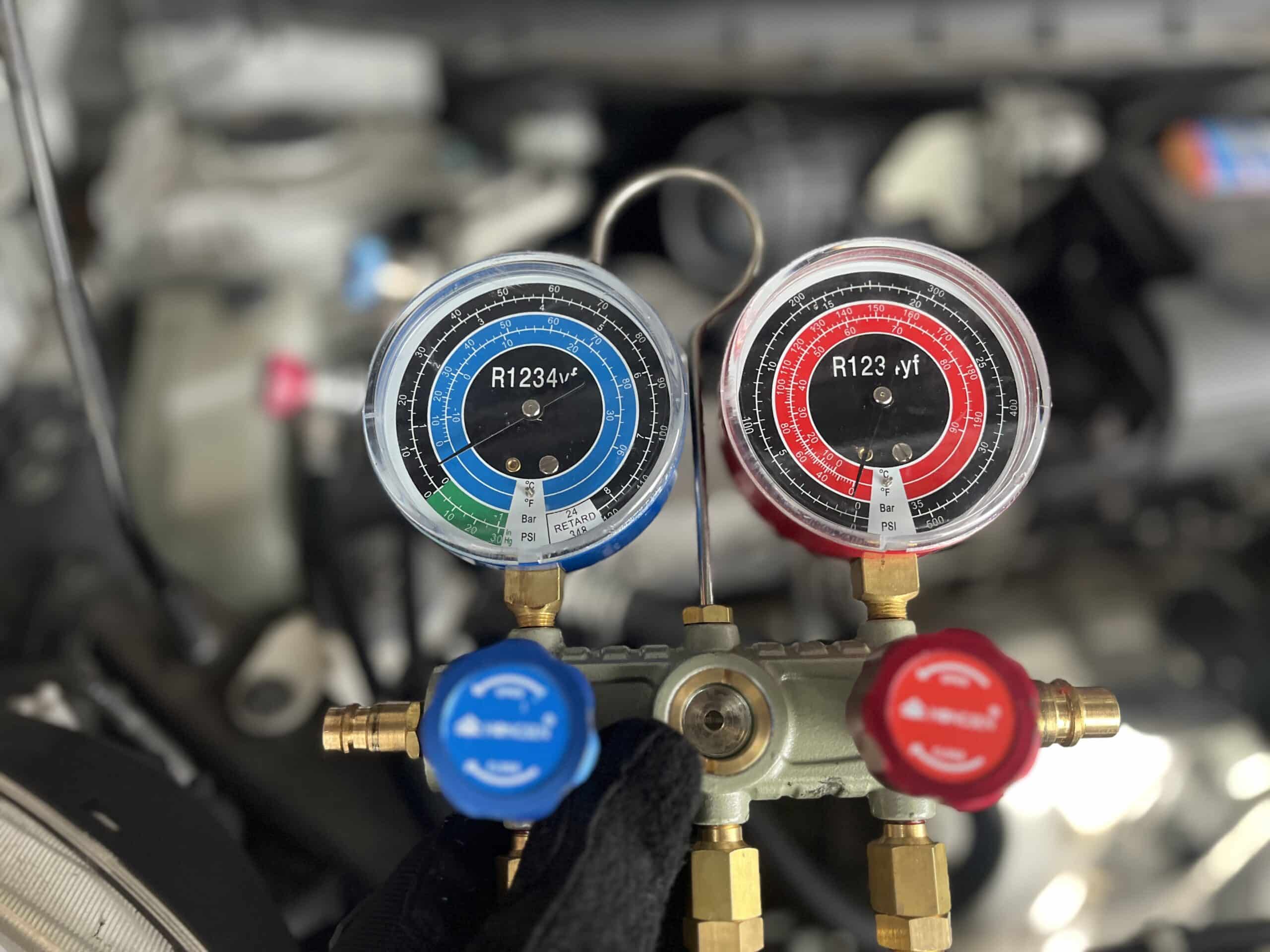
21 May Which AC Gas Fits Your Car
Which AC Gas Fits Your Car? R134a vs HFO-1234yf Guide
Which AC Gas Fits Your Car? R134a vs HFO-1234yf Explained
When your car’s air conditioning stops blowing cold air, one of the first questions many drivers ask is, “Which AC gas does my car use?” Using the correct refrigerant is essential for keeping your air conditioning system operating safely, efficiently and reliably.
Most vehicles manufactured before 2014 use R134a refrigerant, while many newer vehicles use HFO-1234yf, a more environmentally friendly refrigerant designed to reduce greenhouse gas emissions. However, the exact refrigerant your vehicle requires depends on its make, model and year of manufacture.
At Keepin Cool Auto Air Conditioning, we’ve spent more than 40 years repairing and servicing vehicle air conditioning systems across Brisbane Bayside and Redland City. As an ARCtick Licensed Technician (AU13448), Jamie Ruf services both R134a and HFO-1234yf systems using the correct equipment and manufacturer-approved procedures.
This guide explains the differences between the two refrigerants, how to identify which one your vehicle uses, why using the correct gas matters and answers the most common questions Brisbane drivers ask.
Quick Answer – Which AC Gas Does My Car Use?
If you’re unsure which refrigerant your vehicle requires, this guide provides a quick starting point.
| Vehicle Age | Most Common Refrigerant |
|---|---|
| Built before 2014 | R134a |
| Built from 2015 onwards | HFO-1234yf |
Important: These are general guidelines only. Some manufacturers changed earlier or later than others, so you should always confirm the refrigerant type using the label under your bonnet or by checking your owner’s manual.
If you’re unsure, Keepin Cool Auto Air Conditioning can quickly identify the correct refrigerant before carrying out any repairs or regassing.
Advice From Jamie – 40+ Years Repairing Vehicle Air Conditioning Systems
One of the most common questions I get asked is:
“Can you just top up my air conditioning gas?”
After more than 40 years repairing vehicle air conditioning systems, I’ve found that many people don’t realise there are different refrigerants designed for different vehicles.
Using the wrong refrigerant can reduce cooling performance, contaminate the air conditioning system and lead to expensive repairs. I also regularly inspect vehicles that have been topped up without identifying the real problem, when the actual issue was a refrigerant leak or a failing compressor.
That’s why every vehicle I service is inspected first. I confirm the correct refrigerant, check for leaks, test the system’s performance and explain the repair options before adding any refrigerant.
A professional diagnosis helps ensure your air conditioning system is repaired correctly the first time and saves you paying for unnecessary regassing.
Why There Are Two Types of Car Air Conditioning Refrigerant
Vehicle air conditioning systems have changed significantly over the past few decades as manufacturers have worked to reduce their environmental impact.
R12 – The Original Refrigerant
Older vehicles manufactured before the mid-1990s commonly used R12 refrigerant. Although it provided excellent cooling performance, it was eventually phased out because it damaged the Earth’s ozone layer.
Today, R12 is no longer used in modern vehicles and cannot legally be installed in Australian passenger vehicles.
R134a – The Industry Standard
R134a became the replacement for R12 and was fitted to millions of vehicles worldwide.
For many years it offered excellent cooling performance, reliability and affordability, making it the most common refrigerant found in Australian vehicles manufactured before 2014.
Although R134a doesn’t damage the ozone layer like R12, it still has a relatively high Global Warming Potential (GWP). As environmental standards became stricter, manufacturers began transitioning to a more environmentally friendly alternative.
HFO-1234yf – The Modern Refrigerant
HFO-1234yf is now fitted to most modern vehicles.
It provides cooling performance similar to R134a while dramatically reducing greenhouse gas emissions thanks to its much lower Global Warming Potential.
Although HFO-1234yf is more environmentally friendly, it also requires:
- Different servicing equipment
- Special handling procedures
- Dedicated recovery machines
- ARCtick licensed technicians
- More expensive refrigerant
These factors explain why servicing HFO-1234yf systems generally costs more than servicing older R134a systems.
Why Using the Correct Refrigerant Matters
Choosing the correct refrigerant isn’t simply about following manufacturer recommendations—it’s essential for protecting your entire air conditioning system.
Using the wrong refrigerant can result in:
- Reduced cooling performance
- Incorrect operating pressures
- Compressor damage
- Contaminated refrigerant recovery equipment
- Expensive repairs
- Environmental compliance issues
Every vehicle is designed to operate with a specific refrigerant, compressor oil and system pressures. Mixing refrigerants or using the wrong gas can significantly reduce the lifespan of expensive components.
That’s why Keepin Cool Auto Air Conditioning always confirms the correct refrigerant before carrying out any regas or repair.
R134a vs HFO-1234yf – What’s the Difference?
Although both refrigerants perform the same basic job of cooling your vehicle, there are several important differences between them. Understanding these differences will help you understand why some air conditioning services cost more and why using the correct refrigerant is so important.
| Feature | R134a | HFO-1234yf |
|---|---|---|
| Commonly Used | Most vehicles before 2014 | Most vehicles from 2015 onwards |
| Cooling Performance | Excellent | Excellent |
| Environmental Impact | Higher Global Warming Potential | Very Low Global Warming Potential |
| Refrigerant Cost | Lower | Higher |
| Servicing Equipment | Standard R134a equipment | Dedicated HFO-1234yf equipment |
| Compressor Oil | PAG Oil (vehicle specific) | Different PAG oil specifications depending on vehicle |
| Mixing Refrigerants | Not permitted | Not permitted |
Both refrigerants provide excellent cooling performance when used in the correct air conditioning system. The biggest difference is that HFO-1234yf has been developed to significantly reduce environmental impact while maintaining similar cooling efficiency.
How Do I Know Which Refrigerant My Car Uses?
If you’re unsure which refrigerant your vehicle requires, don’t guess.
There are several easy ways to identify the correct refrigerant.
1. Check the Label Under the Bonnet
Most vehicles have an air conditioning information label located under the bonnet. This label clearly states whether the vehicle uses:
- R134a
- HFO-1234yf
It will often also display the exact refrigerant weight required for your vehicle.
2. Check Your Owner’s Manual
Your owner’s manual will specify the correct refrigerant type and system capacity.
Manufacturers include this information to ensure servicing is carried out correctly throughout the life of the vehicle.
3. Ask an ARCtick Licensed Technician
If you’re still unsure, Keepin Cool Auto Air Conditioning can quickly identify the correct refrigerant during an inspection.
With over 40 years of experience servicing vehicle air conditioning systems, we can identify the correct refrigerant before any repairs or regassing begin.

Can You Convert R134a to HFO-1234yf?
This is one of the most common questions we receive.
In most cases, the answer is no.
Although both refrigerants cool your vehicle, the air conditioning systems are designed specifically for one refrigerant.
Converting an R134a system to HFO-1234yf usually requires significant modifications, including different service fittings, compatible seals, appropriate compressor oil and, in some cases, replacement components.
For most vehicle owners, converting the system isn’t practical or cost-effective.
The best option is to continue servicing your vehicle using the refrigerant specified by the manufacturer.

What Happens If the Wrong Refrigerant Is Used?
Using the wrong refrigerant can create serious problems for your vehicle’s air conditioning system.
Possible issues include:
- Poor cooling performance
- Incorrect operating pressures
- Compressor damage
- Seal deterioration
- Refrigerant contamination
- Expensive repairs
- Incorrect compressor oil circulation
One of the biggest problems occurs when refrigerants become contaminated.
Professional recovery machines are designed for one refrigerant at a time. Mixing refrigerants contaminates recovery equipment and can make the refrigerant impossible to recycle correctly.
That’s why ARCtick licensed technicians always confirm the refrigerant before connecting servicing equipment.
Why Does HFO-1234yf Cost More?
Many customers ask why servicing modern vehicles costs more than older vehicles.
The answer isn’t simply the refrigerant itself.
Several factors contribute to the higher cost.
More Expensive Refrigerant
HFO-1234yf refrigerant is significantly more expensive than R134a because of its specialised manufacturing process and lower production volumes.
Specialised Servicing Equipment
Servicing HFO-1234yf systems requires dedicated recovery and charging machines that cannot be used on R134a systems.
These machines are considerably more expensive than traditional equipment.
Additional Safety Requirements
Although HFO-1234yf is considered safe when handled correctly, it is classified as mildly flammable.
Technicians must follow specific servicing procedures and use equipment designed specifically for this refrigerant.
ARCtick Licensing Requirements
Australian refrigerant handling laws require refrigerants to be recovered, recycled and handled correctly.
At Keepin Cool Auto Air Conditioning, every service is carried out by an ARCtick Licensed Technician (AU13448) using professional equipment that complies with Australian regulations.
Common Mistakes We See
After repairing vehicle air conditioning systems for more than 39 years, we’ve seen the same mistakes repeated time and time again.
Some of the most common include:
- Assuming every air conditioner simply needs a regas.
- Using DIY recharge kits without diagnosing the problem.
- Guessing which refrigerant the vehicle uses.
- Continuing to drive with a refrigerant leak.
- Delaying repairs until the compressor fails.
- Mixing refrigerants.
- Ignoring poor cooling performance during winter.
Many expensive compressor replacements begin as small refrigerant leaks that could have been repaired much earlier.
That’s why every Keepin Cool inspection focuses on identifying the cause of the problem before recommending repairs or adding refrigerant.
Why Refrigerant Choice Matters in Brisbane
Brisbane’s hot, humid climate places extra demand on your vehicle’s air conditioning system. During summer, it’s common for your AC to run almost continuously, especially in heavy stop-start traffic around Brisbane Bayside and Redland City.
Over time, this constant workload can expose small refrigerant leaks, reduce cooling performance and place additional strain on the compressor.
Whether your vehicle uses R134a or HFO-1234yf, regular servicing helps maintain maximum cooling performance and can identify minor problems before they become expensive repairs.
After more than 40 years servicing vehicle air conditioning systems, we’ve found that early diagnosis is one of the best ways to avoid unexpected breakdowns during Queensland’s hottest months.
Why Choose Keepin Cool Auto Air Conditioning?
Choosing the correct refrigerant is only part of the job. Having your vehicle serviced by an experienced, qualified technician is just as important.
When you choose Keepin Cool Auto Air Conditioning, you’ll receive:
- Over 40 years of specialist auto air conditioning experience
- Owner-operated mobile service by Jamie Ruf
- ARCtick Licensed Technician (AU13448)
- Mobile service at your home or workplace
- Professional diagnostics before recommending a regas
- Specialists in both R134a and HFO-1234yf systems
- Honest advice with no unnecessary repairs
- Correct refrigerant and oil specifications for your vehicle
We don’t simply recharge air conditioning systems—we diagnose the cause of poor cooling first to ensure your vehicle receives the correct repair.
Mobile Car Air Conditioning Pricing Guide
If you’re unsure which refrigerant your vehicle uses, a professional inspection is often the quickest and safest way to find out.
Below is a general guide to our mobile service pricing.
| Service | Typical Price |
|---|---|
| R134a Car Air Conditioning Regas | From $270 |
| HFO-1234yf Car Air Conditioning Regas | From $590 |
| Car AC Leak Detection | From $170 |
| Full System Diagnostics | From $170 |
| Car AC Compressor Replacement | From $1,150 |
| Car Air Conditioning Hose Repair | From $180 |
Important: Every vehicle is inspected before refrigerant is added. If we identify a refrigerant leak, compressor fault or another issue, we’ll explain your repair options before recommending a regas.
Need a quick quote?
SMS your vehicle registration and suburb to 0415 761 019, and we’ll provide an estimate based on your vehicle and symptoms.
Keeping Your Car Air Conditioning Performing at Its Best
Regular maintenance helps improve cooling performance and reduce the likelihood of expensive repairs.
Do
- Run your air conditioning for around 10 minutes each week, even during winter.
- Replace the cabin air filter at the recommended service intervals.
- Keep the condenser free from leaves, dirt and insects.
- Have your air conditioning professionally inspected every 1–2 years.
- Address poor cooling performance as soon as you notice it.
Don’t
- Mix different refrigerants.
- Use DIY refrigerant recharge kits.
- Ignore refrigerant leaks.
- Continue driving with poor cooling performance for months.
- Assume every system simply needs a regas.
Early diagnosis usually saves far more money than waiting for a complete compressor failure.
Frequently Asked Questions About Car Air Conditioning Refrigerants
How do I know which AC gas my car uses?
The easiest way is to check the refrigerant label under the bonnet or refer to your owner’s manual. If you’re unsure, Keepin Cool Auto Air Conditioning can quickly identify the correct refrigerant during an inspection.
Can I mix R134a and HFO-1234yf?
No. Mixing refrigerants contaminates the air conditioning system and professional recovery equipment. Each refrigerant requires dedicated servicing equipment and should never be mixed.
Why is HFO-1234yf more expensive?
HFO-1234yf refrigerant costs more to manufacture and requires specialised servicing equipment, dedicated recovery machines and specific handling procedures.
Can I convert my vehicle from R134a to HFO-1234yf?
In most cases, no. Vehicle air conditioning systems are designed specifically for one refrigerant, and converting between refrigerants usually isn’t practical or cost-effective.
Is HFO-1234yf flammable?
HFO-1234yf is classified as mildly flammable, which is why manufacturers and technicians follow strict servicing procedures. When handled correctly using approved equipment, it is considered safe for automotive use.
Why is my car air conditioner still blowing warm air after a regas?
This usually indicates another fault, such as a refrigerant leak, compressor problem or electrical issue. Simply adding refrigerant won’t fix an underlying mechanical fault.
How often should my car air conditioning be serviced?
Most manufacturers recommend servicing every two years. However, because Brisbane experiences long, hot summers, an annual inspection is often worthwhile.
Will using the wrong refrigerant damage my air conditioning system?
Yes. Incorrect refrigerants can reduce cooling performance, contaminate the system, damage the compressor and result in expensive repairs.
Can you identify which refrigerant my vehicle uses?
Yes. Keepin Cool Auto Air Conditioning can identify the correct refrigerant, inspect your air conditioning system and recommend the most appropriate repairs before carrying out any work.
Do you service both R134a and HFO-1234yf systems?
Yes. We service and repair both refrigerant systems using professional equipment and manufacturer-approved procedures.
Final Thoughts
Choosing the correct refrigerant is essential for keeping your vehicle’s air conditioning operating safely, efficiently and reliably. Whether your car uses R134a or HFO-1234yf, using the correct refrigerant, compressor oil and servicing procedures helps protect your air conditioning system and avoid unnecessary repairs.
If you’re unsure which refrigerant your vehicle requires, don’t guess. A professional inspection can quickly identify the correct refrigerant, check for leaks and ensure your air conditioning is performing at its best.
Need Help Identifying Your Car’s AC Gas?
If your air conditioner isn’t cooling properly or you’re unsure whether your vehicle uses R134a or HFO-1234yf, Keepin Cool Auto Air Conditioning is here to help.
With more than 40 years of hands-on experience, ARCtick Licence AU13448, and convenient mobile service across Brisbane Bayside and Redland City, we’ll identify the correct refrigerant, diagnose any faults and recommend the right solution before carrying out any repairs.
Need a quick quote?
Simply SMS your vehicle registration and suburb to 0415 761 019, and we’ll reply with an estimate as quickly as possible.