

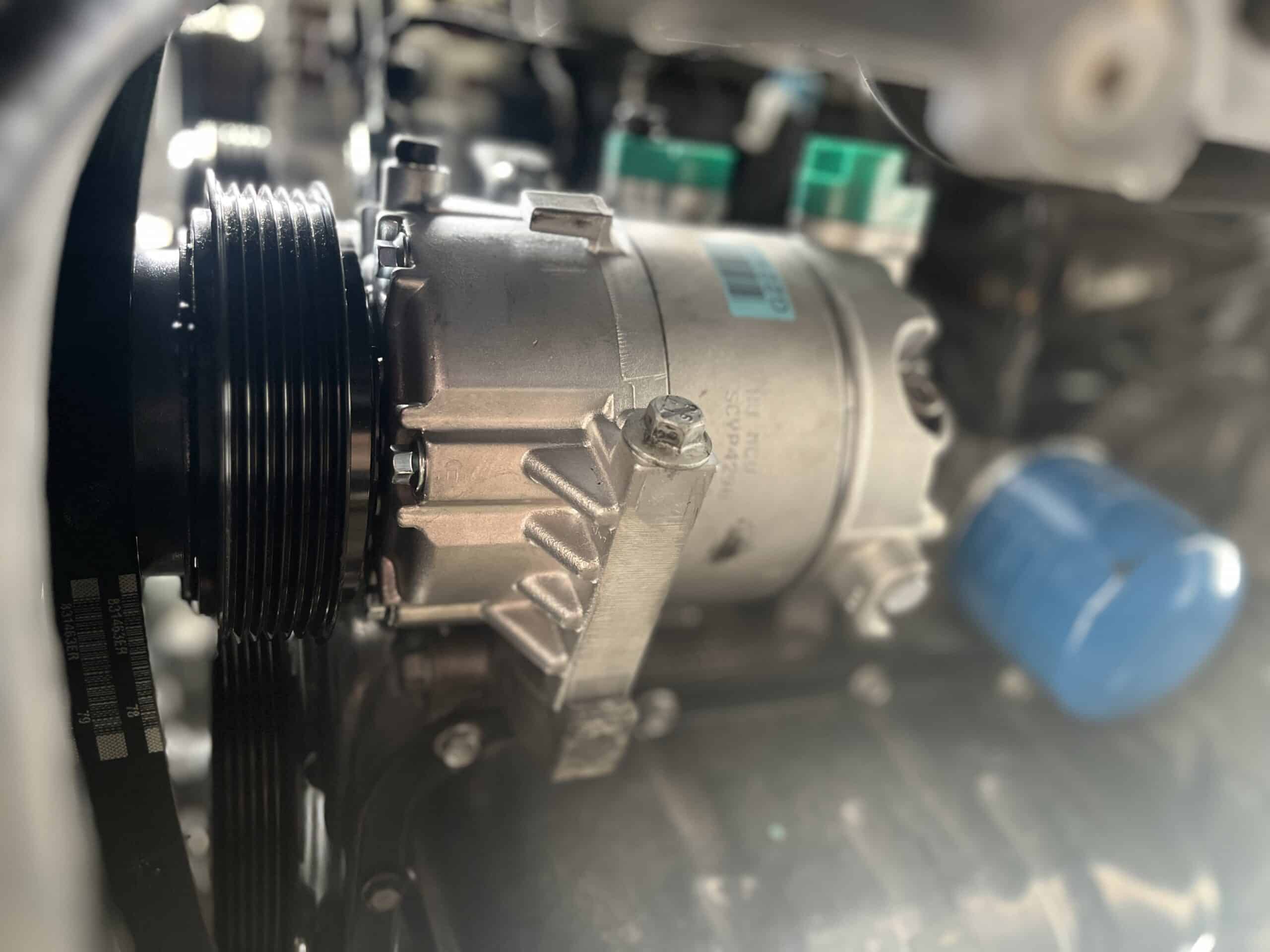
03 Feb Car AC Compressor Buyers Guide
Car AC Compressor Buyers Guide: How to Choose the Right Compressor for Your Vehicle
If your vehicle’s air conditioning has stopped blowing cold air, is making unusual noises or your compressor has failed, choosing the correct replacement is one of the most important decisions you’ll make. While there are plenty of compressors available online and through parts suppliers, not all offer the same quality, reliability or compatibility. Choosing the wrong compressor can lead to poor cooling performance, repeat failures and unnecessary repair costs.
This comprehensive buyer’s guide explains everything you need to know before purchasing a replacement car AC compressor. You’ll learn how compressors work, what causes them to fail, the differences between OEM and aftermarket units, common buying mistakes and how to maximise the lifespan of your new compressor.
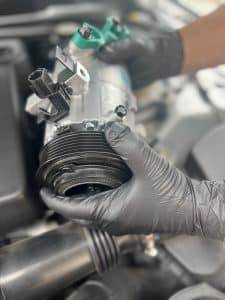
Professional compressor replacement carried out at the customer’s home or workplace.
With more than 40 years of hands-on experience and ARCtick Refrigerant Handling Licence AU13448, Keepin Cool has diagnosed and repaired thousands of vehicle air conditioning systems throughout Brisbane Bayside and Redland City. The advice in this guide is based on practical workshop experience and industry best practices, helping you make informed decisions before spending money on replacement parts.
Quick Answer
A car AC compressor is the heart of your vehicle’s air conditioning system. The best replacement compressor is one that exactly matches your vehicle’s specifications, comes from a trusted manufacturer and is installed only after the system has been professionally diagnosed. Simply replacing the compressor without repairing the original fault can result in another expensive failure.
What You’ll Learn
- What a car AC compressor does
- Signs your compressor may be failing
- Common causes of compressor failure
- OEM vs aftermarket compressors
- New vs reconditioned compressors
- How to choose the correct compressor
- Trusted compressor brands
- Replacement costs
- Common buying mistakes
- Frequently asked questions
What Does a Car AC Compressor Do?
The compressor is often described as the heart of your vehicle’s air conditioning system. Its job is to compress refrigerant gas and circulate it through the condenser, receiver drier, expansion valve and evaporator before returning to the compressor to repeat the cooling cycle.
Without a properly functioning compressor, your air conditioning system cannot remove heat from inside the cabin. Even if the system contains the correct amount of refrigerant, a faulty compressor means little or no cold air will be produced.
Modern compressors are precision-built components that rely on correct refrigerant levels, clean compressor oil and proper lubrication to operate efficiently. Even a small refrigerant leak can reduce lubrication over time and significantly shorten compressor life.
Before replacing a compressor, we always recommend a professional Car Air Conditioning Inspection & fault diagnostics to identify the root cause of the problem. This helps prevent unnecessary parts replacement and ensures the correct repair is carried out the first time.
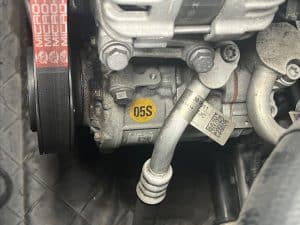
Oil staining around the compressor is a common sign of refrigerant leakage.
Signs Your Car AC Compressor May Be Failing
Compressor problems usually develop gradually. Recognising the warning signs early can help prevent more extensive and expensive repairs.
- Air conditioner blowing warm or only slightly cool air
- Weak cooling performance, especially on hot days
- Grinding, rattling or squealing noises when the air conditioner is operating
- Compressor clutch not engaging
- Visible refrigerant or oil leaks around the compressor
- Air conditioning cycling on and off repeatedly
- Metal contamination found during system inspection
- A burning smell caused by compressor clutch failure
If you notice any of these symptoms, it’s best to have the system professionally inspected before continuing to use it. Driving with a failing compressor can spread metal particles throughout the air conditioning system, increasing the cost of repairs.
You may also find our guide on Can You Drive With a Bad AC Compressor? helpful if you’re unsure whether it’s safe to continue driving.
Why Professional Diagnosis Matters
A failed compressor is often the result of another problem rather than the original cause. Refrigerant leaks, electrical faults, contaminated oil or moisture inside the system can all contribute to premature compressor failure. Simply replacing the compressor without identifying the underlying issue may result in another failure within a short period.
At Keepin Cool, every compressor replacement begins with a complete system inspection, leak testing and performance analysis. This allows us to identify the actual fault before recommending repairs, helping you avoid unnecessary costs and giving your new compressor the best chance of a long service life.
Common Causes of Car AC Compressor Failure
Understanding why a compressor has failed is just as important as choosing a replacement. In many cases, the compressor is the victim rather than the cause of the problem. Replacing it without identifying the underlying fault can lead to another expensive repair.
The most common causes of compressor failure include:
- Low refrigerant caused by leaks
- Contaminated or incorrect compressor oil
- Moisture entering the air conditioning system
- Internal bearing wear
- Electrical faults or wiring issues
- A seized compressor clutch or pulley bearing
- Blocked condensers or poor airflow
- Lack of regular servicing
Professional diagnosis before replacing the compressor helps identify these issues and ensures the correct repair is carried out.
OEM vs Aftermarket Compressors
One of the biggest decisions when replacing a compressor is whether to choose an Original Equipment Manufacturer (OEM) compressor or an aftermarket replacement.
OEM Compressors
OEM compressors are manufactured to the original vehicle manufacturer’s specifications and are often supplied by companies such as Denso or Sanden.
Advantages
- Exact fit for your vehicle
- Excellent reliability
- High manufacturing quality
- Often backed by strong warranties
Disadvantages
- Higher purchase price
- May have longer delivery times for some vehicles
Aftermarket Compressors
Quality aftermarket compressors can provide excellent value when purchased from reputable manufacturers.
Advantages
- Lower purchase cost
- Readily available for many vehicles
- Suitable for older vehicles where OEM parts may no longer be available
Disadvantages
- Quality varies significantly between manufacturers
- Very cheap units may have a shorter service life
Our recommendation is to choose quality over price. A well-manufactured compressor installed correctly will usually save money over the long term.
New vs Reconditioned Compressors
Another common question is whether to purchase a brand-new compressor or a reconditioned unit.
New Compressors
- Maximum reliability
- Latest manufacturing improvements
- Manufacturer warranty
- Longer expected lifespan
Reconditioned Compressors
- Lower purchase price
- Can be suitable for some older vehicles
- Quality depends on who rebuilt the compressor
- Warranty periods are often shorter
For most passenger vehicles, we recommend fitting a quality new compressor whenever possible. It generally provides the best long-term value and reliability.
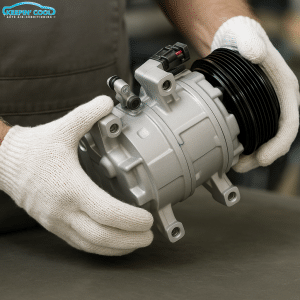
Comparing a new compressor with one that has failed internally.
How to Choose the Correct Compressor
Before purchasing a replacement compressor, make sure it matches your vehicle exactly. Choosing the wrong compressor can result in installation problems, poor performance or additional repair costs.
Always confirm:
- Vehicle make and model
- Build year
- Engine size
- VIN (Vehicle Identification Number)
- Refrigerant type (R134a or HFO-1234yf)
- Compressor part number
- Pulley configuration
- Electrical connector type
- Mounting points
If you’re unsure which compressor your vehicle requires, a professional inspection is the safest way to avoid ordering the wrong component. Our Car AC Compressor Replacement service includes confirming the correct replacement before installation.
Expert Tip
Always confirm the VIN before ordering a replacement compressor. Some vehicles use different compressors within the same model year depending on engine size, build date or factory options.
Types of Car AC Compressors
| Compressor Type | Common Applications | Advantages |
|---|---|---|
| Rotary | Small passenger vehicles | Compact, efficient and quiet operation |
| Reciprocating | Many older vehicles | Reliable and widely available |
| Scroll | Modern passenger vehicles | Smooth operation, improved efficiency and quieter performance |
| Variable Displacement | Many late-model vehicles | Automatically adjusts cooling output to improve efficiency and reduce engine load |
Expert Tip
Replacing a compressor without repairing the original fault often results in another compressor failure. If metal contamination, moisture or refrigerant leaks remain in the system, even a brand-new compressor can fail prematurely. Professional diagnosis before replacement helps protect your investment.
Trusted Car AC Compressor Brands
Not all air conditioning compressors are manufactured to the same standard. Choosing a quality brand can improve reliability, cooling performance and the lifespan of your new compressor.
Some of the most trusted compressor manufacturers include:
Denso
Denso compressors are fitted as original equipment on many Japanese vehicles and have an excellent reputation for reliability, quiet operation and long service life. They are commonly found on Toyota, Mazda, Honda and other Japanese manufacturers.
Sanden
Sanden has been producing automotive air conditioning compressors for decades and supplies many vehicle manufacturers worldwide. Their compressors are known for excellent cooling performance and durability.
Valeo
Valeo is a respected European manufacturer producing high-quality replacement compressors for many passenger vehicles. Their products are widely used across European makes and models.
Delphi
Delphi compressors are commonly used in both original equipment and aftermarket applications. They offer reliable performance when correctly matched to the vehicle.
Regardless of brand, the most important factor is selecting the correct compressor for your vehicle and ensuring it is professionally installed.
Should Other Components Be Replaced?
One of the biggest mistakes we see is replacing only the compressor after a failure.
If the compressor has suffered an internal failure, metal particles can circulate throughout the air conditioning system. Installing a new compressor without cleaning the system may cause the replacement unit to fail prematurely.
Depending on the fault, we may also recommend replacing:
- Receiver drier or accumulator
- Expansion valve or orifice tube
- Compressor O-rings and seals
- Damaged hoses
- Contaminated refrigerant oil
In many cases the entire system should also be professionally flushed to remove contamination before fitting the new compressor.
Learn more about our Car AC Leak Detection & Pressure Testing service if contamination or refrigerant leaks are suspected.
Common Buying Mistakes
Buying the wrong compressor or skipping important repairs can quickly turn a simple replacement into an expensive repair.
Avoid these common mistakes:
- Buying the cheapest compressor available.
- Ordering the wrong compressor for your vehicle.
- Replacing the compressor without fixing refrigerant leaks.
- Ignoring contamination inside the air conditioning system.
- Failing to replace worn O-rings or supporting components.
- Using the wrong refrigerant or compressor oil.
- Skipping evacuation and vacuum testing before recharging.
Professional diagnosis before replacing parts usually saves money by ensuring the correct repair is carried out the first time.
How Much Does Car AC Compressor Replacement Cost?
The cost of replacing a car AC compressor varies depending on several factors.
These include:
- Vehicle make and model
- Type of refrigerant (R134a or HFO-1234yf)
- Compressor manufacturer
- Labour required
- Additional components needing replacement
- Whether the system requires flushing or leak repairs
Car AC compressor replacement with Keepin Cool starts from $1,150. Final cost depends on the vehicle, compressor required and whether additional system repairs or flushing are needed.
Every vehicle is different, which is why we always recommend a professional inspection before quoting repairs.
Our Car AC Compressor Replacement service includes system testing, diagnosis and confirmation of the correct replacement compressor before installation.
Vehicles We Commonly Replace Compressors On
Over the past 40 years we’ve replaced compressors on thousands of vehicles throughout Brisbane Bayside and Redland City.
Some of the most common include:
- Ford Ranger
- Toyota Hilux
- Toyota Prado
- Toyota LandCruiser
- Mazda BT-50
- Mazda CX-5
- Mitsubishi Triton
- Mitsubishi Pajero
- Hyundai i30
- Hyundai Accent
- Honda CR-V
- Suzuki Swift
- Isuzu D-Max
- Nissan Navara
Whether you drive a passenger car, SUV, ute or four-wheel drive, selecting the correct compressor is essential for reliable cooling performance.
Expert Advice From Keepin Cool
After more than 40 years repairing vehicle air conditioning systems, one thing remains consistent: replacing the compressor without identifying why it failed usually leads to repeat problems.
Every compressor replacement should begin with professional diagnosis, leak testing and a full inspection of the entire air conditioning system. This helps identify contamination, refrigerant leaks and worn components before they damage the replacement compressor.
While choosing a quality compressor is important, proper installation and system preparation are what determine how long it will last.
Frequently Asked Questions
How do I know if my car AC compressor needs replacing?
Common signs include warm air from the vents, unusual grinding or squealing noises, the compressor clutch not engaging, refrigerant leaks around the compressor or poor cooling performance. A professional inspection is the best way to confirm whether the compressor has failed or if another component is causing the problem.
Can a faulty car AC compressor be repaired?
In some cases, minor issues such as a worn clutch or pulley bearing may be repairable. However, if the compressor has suffered internal damage or contamination, replacement is usually the most reliable and cost-effective solution.
Should I buy an OEM or aftermarket AC compressor?
OEM compressors are manufactured to the vehicle manufacturer’s specifications and generally offer excellent reliability. High-quality aftermarket compressors can also provide good performance, provided they are sourced from reputable manufacturers and correctly matched to your vehicle.
Is a reconditioned compressor worth buying?
A reconditioned compressor may be suitable for some older vehicles, but quality can vary depending on how it was rebuilt. For most vehicles, we recommend fitting a quality new compressor for maximum reliability and warranty protection.
Do I need to replace the receiver drier when replacing the compressor?
In many cases, yes. If the compressor has failed internally or the air conditioning system has been opened, replacing the receiver drier helps remove moisture and contaminants, protecting the new compressor from premature failure.
What causes a car AC compressor to fail?
The most common causes include refrigerant leaks, low refrigerant levels, contaminated compressor oil, moisture inside the system, electrical faults, bearing wear and lack of regular servicing. Identifying the underlying cause is essential before replacing the compressor.
Can I drive my vehicle with a faulty AC compressor?
It depends on the type of failure. If the compressor has seized or the clutch or pulley is damaged, continuing to drive may damage the drive belt or other engine components. We recommend having the system inspected as soon as possible.
How much does a car AC compressor replacement cost?
Replacement costs vary depending on your vehicle, refrigerant type, compressor manufacturer and whether additional components need replacing. A professional inspection is the best way to determine the correct repair and provide an accurate quote.
How long should a car AC compressor last?
Most compressors last between 8 and 15 years, depending on vehicle usage, servicing, operating conditions and whether the air conditioning system has been properly maintained.
Why should I choose Keepin Cool for compressor replacement?
With over 40 years of hands-on experience and ARCtick Refrigerant Handling Licence AU13448, Keepin Cool provides professional mobile car air conditioning diagnostics, compressor replacement and repairs throughout Brisbane Bayside and Redland City. Every repair begins with a thorough inspection to identify the real cause of the problem before any parts are replaced.
Why Drivers Across Brisbane Trust Keepin Cool
✔ ARCtick Refrigerant Handling Licence AU13448
✔ Mobile service at your home or workplace
✔ Honest fault diagnosis
✔ Quality replacement components
✔ Professional refrigerant recovery equipment
✔ Servicing Brisbane Bayside & Redland City
Related Car Air Conditioning Guides
You may also find these expert guides helpful: