

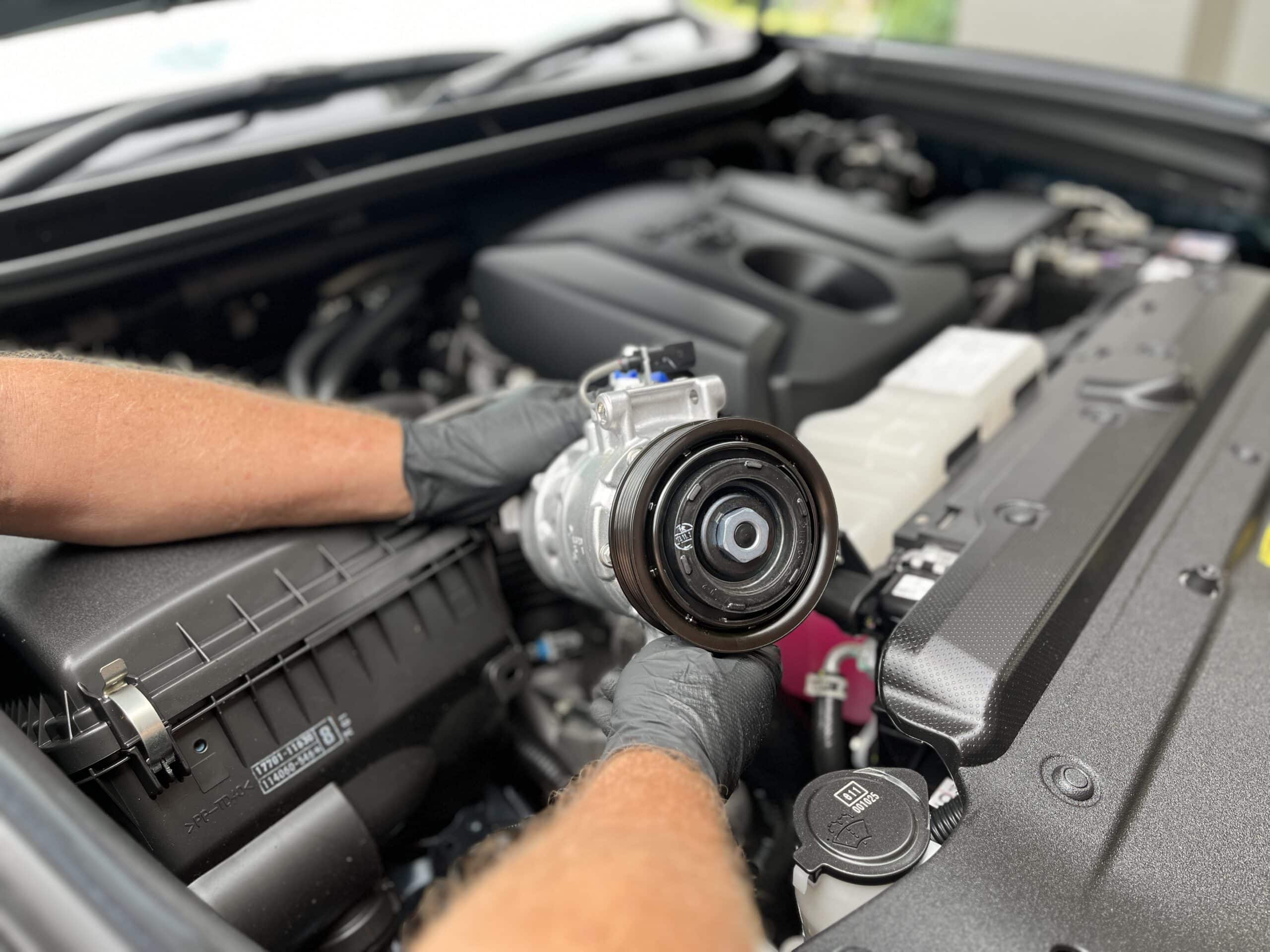
15 May Can You Drive with a Noisy AC Compressor?
Can You Drive With a Noisy AC Compressor? (Brisbane Expert Guide)
Has your car’s air conditioning started making strange noises? Whether it’s a grinding, squealing, rattling or clicking sound, a noisy AC compressor is usually your vehicle’s way of telling you something isn’t right.
One of the most common questions we hear at Keepin Cool Auto Air Conditioning is:
“Can I keep driving with a noisy AC compressor?”
The short answer is yes—but it depends on what’s causing the noise. Some compressor noises are relatively minor, while others can indicate serious internal damage that may lead to a complete air conditioning system failure if ignored.
With more than 40 years of hands-on experience repairing vehicle air conditioning systems across Brisbane Bayside and Redland City, we’ve diagnosed thousands of noisy compressors. In this guide, we’ll explain what different compressor noises mean, when it’s safe to keep driving, when you should switch the air conditioner off immediately, and how early diagnosis can save you from expensive repairs.
Quick Answer – Can You Drive With a Noisy AC Compressor?
Yes—but only in some situations.
If your air conditioning is still cooling normally and the noise is only slight, you may be able to continue driving for a short period. However, loud grinding, squealing or knocking noises usually indicate a mechanical problem that should be inspected as soon as possible.
If you notice any of the following, it’s best to switch the air conditioner off immediately:
- Loud grinding or metal-on-metal noises
- Burning smells from the engine bay
- Smoke around the compressor
- The drive belt slipping or squealing continuously
- The air conditioner suddenly stops cooling
- The compressor locks up or stops turning
Continuing to operate a failing compressor can spread metal particles throughout the air conditioning system, turning a relatively simple repair into a much more expensive one.
Advice From Jamie – 40+ Years Repairing Vehicle Air Conditioning Systems
After repairing vehicle air conditioning systems for more than 40 years, one of the most common questions I get asked is:
“Can I keep driving if my AC compressor is making noise?”
The answer depends entirely on the type of noise you’re hearing.
A light clicking noise may simply indicate normal compressor cycling, while grinding, squealing or knocking noises often suggest worn bearings, internal compressor damage or a failing clutch.
One mistake I regularly see is drivers continuing to use the air conditioner for weeks after the compressor first starts making noise. Unfortunately, by the time they call me, the compressor has often failed completely, sending metal debris through the entire air conditioning system. What may have started as a relatively straightforward repair can quickly become a much more expensive job involving the compressor, condenser, expansion valve and receiver drier.
That’s why I always recommend having unusual compressor noises inspected early. Diagnosing the problem before the compressor fails completely can often save hundreds or even thousands of dollars in repair costs.
Understanding Your Car’s AC Compressor
The air conditioning compressor is often referred to as the heart of your vehicle’s air conditioning system.
Its job is to compress and circulate refrigerant throughout the system, allowing heat to be removed from the cabin and replaced with cool air.
Like any mechanical component, the compressor contains moving parts that wear over time. Bearings, seals, pistons, valves and the compressor clutch are all subject to wear, especially in vehicles that operate in Brisbane’s hot climate for much of the year.
When one of these components begins to fail, unusual noises are often one of the first warning signs that something isn’t right.
Ignoring these noises may allow a minor repair to develop into a major compressor replacement.
What Does a Noisy AC Compressor Sound Like?
The type of noise your compressor makes often provides valuable clues about the underlying problem.
Grinding Noise
A grinding noise usually indicates internal compressor wear or damaged bearings.
If you hear metal-on-metal grinding whenever the air conditioner is operating, switch the AC off and arrange an inspection as soon as possible.
Squealing Noise
A squealing noise may indicate:
- Worn compressor bearings
- A slipping drive belt
- Pulley problems
- A failing compressor clutch
Although the compressor itself may not always be faulty, the noise should still be investigated before further damage occurs.
Clicking Noise
A light clicking sound can sometimes be completely normal.
Most compressors cycle on and off as system pressures change.
However, rapid or constant clicking may indicate:
- Low refrigerant
- Electrical faults
- Pressure switch problems
- Compressor clutch issues
Rattling Noise
Rattling noises often come from:
- Loose mounting bolts
- Worn compressor clutch components
- Internal compressor wear
A rattling compressor should always be inspected before it becomes worse.
Hissing Noise
A hissing sound may indicate refrigerant escaping from the system.
This is commonly caused by:
- Refrigerant leaks
- Damaged hoses
- Failed seals
- Loose fittings
Because refrigerant leaks reduce lubrication inside the compressor, continuing to use the air conditioner can eventually damage the compressor itself.
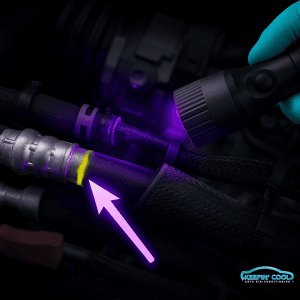
From warm air to hidden oil stains—how to spot the early warning signs of a car AC refrigerant leak.
Common Causes of AC Compressor Noise
Not every noisy compressor needs replacing.
Some of the most common causes we diagnose include:
Low Refrigerant
Low refrigerant levels force the compressor to work harder than intended. Reduced refrigerant also means less compressor oil is circulating through the system, increasing internal wear.
Worn Bearings
Over time, compressor bearings naturally wear. This usually produces a grinding or whining noise that gradually becomes louder.
Failing Compressor Clutch
The compressor clutch engages and disengages the compressor as required.
If the clutch becomes worn or damaged, it may click, rattle or squeal while operating.
Refrigerant Leaks
Small refrigerant leaks often go unnoticed until cooling performance drops.
Running the compressor with insufficient refrigerant can eventually cause serious internal damage.
Internal Compressor Failure
As compressors age, internal pistons, valves and bearings can wear out.
When this happens, replacement is often the most reliable long-term solution.
Can You Continue Driving With a Noisy AC Compressor?
In many cases, yes, you can continue driving your vehicle for a short period, but it depends on the type of noise and whether the air conditioning system is still operating normally.
If the compressor is making a light clicking noise and the air conditioner is still blowing cold air, the problem may be relatively minor. However, if you hear loud grinding, squealing, knocking or metal-on-metal noises, you should avoid using the air conditioner until it has been professionally inspected.
Continuing to operate a failing compressor can increase wear, contaminate the entire air conditioning system and significantly increase repair costs.
If you’re unsure, it’s always safer to switch the air conditioner off and have the system checked as soon as possible.
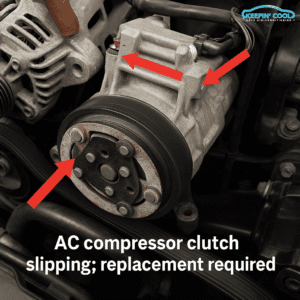
When Should You Stop Driving Immediately?
Some compressor noises indicate a serious mechanical problem that shouldn’t be ignored.
Switch the air conditioner off immediately if you notice:
- Loud grinding or scraping noises
- Smoke from the engine bay
- A burning rubber smell
- The drive belt slipping or squealing continuously
- The compressor clutch locking up
- The air conditioner suddenly stops cooling
- The compressor pulley stops turning
These symptoms may indicate internal compressor failure or a seized bearing. Continuing to use the air conditioning system could cause additional damage to the compressor, drive belt and other air conditioning components.
Although you may still be able to drive the vehicle with the air conditioner switched off, it’s important to arrange a professional inspection as soon as possible.
Why AC Compressors Fail More Often in Brisbane
Brisbane’s climate is one of the toughest environments in Australia for vehicle air conditioning systems.
Long, hot summers, high humidity and heavy stop-start traffic mean compressors often operate for extended periods, especially during the warmer months.
Across Brisbane Bayside and Redland City, we also see the effects of coastal conditions. Salt-laden air can contribute to corrosion around condensers, fittings and other air conditioning components, increasing the likelihood of refrigerant leaks over time.
After more than 40 years repairing vehicle air conditioning systems, we’ve found that many noisy compressors aren’t actually the original problem. More often, a small refrigerant leak reduces lubrication inside the system, causing the compressor to work harder until bearings, pistons or internal components begin to wear.
Early leak detection and regular servicing are often the best ways to prevent expensive compressor failures.
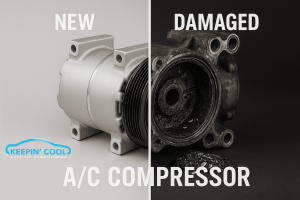
The Risks of Ignoring a Noisy AC Compressor
One of the biggest mistakes we see is waiting until the air conditioner stops working completely.
Unfortunately, compressor problems rarely fix themselves.
Ignoring unusual noises can lead to:
Complete Compressor Failure
Minor bearing wear or clutch problems can eventually develop into complete compressor failure.
Replacing a compressor is considerably more expensive than repairing a minor fault early.
Metal Contamination Throughout the System
If the compressor begins to fail internally, tiny metal particles can circulate throughout the air conditioning system.
These particles can contaminate:
- The condenser
- Expansion valve
- Receiver drier
- Refrigerant lines
This often means additional components must be replaced before a new compressor can be installed.
Increased Repair Costs
Repairing a small refrigerant leak or replacing a worn clutch is generally much less expensive than replacing multiple contaminated components.
Early diagnosis almost always saves money.
Poor Cooling Performance
As compressor wear increases, cooling performance usually declines.
You may notice:
- Warm air from the vents
- Reduced cooling at idle
- Inconsistent temperatures
- Longer cooling times
Getting a Professional Diagnosis
Many compressor noises sound similar, making it difficult to identify the problem without proper testing.
At Keepin Cool Auto Air Conditioning, every inspection begins with a complete system diagnosis.
We check:
- Refrigerant pressures
- Compressor clutch operation
- Bearing condition
- Drive belt condition
- Refrigerant leaks
- Compressor performance
- Cooling efficiency
Rather than simply recommending a compressor replacement, we identify the actual cause of the problem and explain the available repair options.
Sometimes the compressor isn’t the problem at all.
A professional diagnosis can often prevent unnecessary repairs and save hundreds of dollars.
Mobile Car Air Conditioning Pricing Guide
If your compressor has started making unusual noises, one of the first questions is usually:
“How much is this going to cost?”
The answer depends entirely on what’s causing the noise.
A worn bearing, refrigerant leak, compressor clutch or electrical fault can all produce similar symptoms, which is why we always recommend a professional diagnosis before replacing any components.
Below is a general guide to our mobile service pricing.
| Service | Typical Price |
|---|---|
| R134a Car Air Conditioning Regas | From $270 |
| HFO-1234yf Car Air Conditioning Regas | From $590 |
| Car AC Leak Detection | From $170 |
| Full System Diagnostics | From $170 |
| Car AC Compressor Replacement | From $1,150 |
| Car Air Conditioning Hose Repair | From $240 |
Important: A noisy compressor doesn’t always mean the compressor needs replacing. We diagnose the cause first, explain your options and only recommend the repairs your vehicle actually needs.
Need a quick estimate?
SMS your vehicle registration and suburb to 0415 761 019, and we’ll reply with an estimate based on your vehicle and symptoms.
Preventing AC Compressor Problems
Like most vehicle components, your air conditioning compressor will last much longer if it’s serviced regularly and small problems are repaired early.
Many compressor failures we see across Brisbane Bayside and Redland City could have been avoided with routine maintenance and early leak detection.
Do
- Run your air conditioning for around 10 minutes every week, even during winter.
- Have your car air conditioning checked and regassed around every 2 years, and no later than 4 years. Have it inspected sooner if cooling performance drops or unusual noises develop..
- Replace your cabin air filter at the recommended service intervals.
- Keep the condenser free from leaves, dirt and insects.
- Investigate unusual noises as soon as they appear.
- Repair refrigerant leaks before they damage the compressor.
Don’t
- Ignore grinding, squealing or knocking noises.
- Continue operating the air conditioner if the compressor becomes extremely noisy.
- Use DIY refrigerant recharge kits.
- Assume every noisy compressor needs replacing.
- Delay repairs until the air conditioner stops working completely.
Early diagnosis is almost always less expensive than replacing a failed compressor.
Frequently Asked Questions About Noisy AC Compressors
Can I drive with a noisy AC compressor?
In many cases, yes, but only for a short period and only if the noise is minor. Loud grinding, squealing or knocking noises usually indicate a mechanical problem that should be inspected as soon as possible.
Can a noisy AC compressor damage my engine?
Not directly. However, a seized compressor or failing bearing can place excessive strain on the drive belt. If the belt breaks, it may affect other engine accessories depending on your vehicle.
Can low refrigerant cause compressor noise?
Yes. Low refrigerant reduces lubrication inside the compressor, causing internal components to wear more quickly and potentially creating grinding or whining noises.
Does every noisy compressor need replacing?
No. Some noises are caused by worn compressor clutches, loose mounting bolts, refrigerant leaks or drive belt problems. A professional diagnosis will determine the actual cause before replacement is recommended.
Can a regas fix a noisy AC compressor?
Not usually.
If the compressor is noisy because of internal wear or damaged bearings, adding refrigerant won’t solve the problem. However, if the noise is caused by low refrigerant pressure, repairing the leak and correctly recharging the system may restore normal operation.
Why is my AC compressor noisy after a regas?
If the compressor becomes noisy after a regas, the underlying problem may already have existed before the refrigerant was replaced. Internal wear, bearing damage or compressor clutch problems can become more noticeable once the system is operating at normal pressures again.
How much does a compressor replacement cost?
Compressor replacement prices generally start from $1,150, depending on your vehicle’s make, model and refrigerant type.
How long does compressor replacement take?
Most compressor replacements take between 1 and 2 hours. Some vehicles require additional time due to limited access or if extra components also need replacing.
Can I keep driving if I switch the air conditioner off?
In many cases, yes.
If the compressor hasn’t seized and the drive belt is still operating normally, you may be able to continue driving with the air conditioner switched off until the vehicle can be inspected.
However, if you notice smoke, burning smells or the drive belt slipping, stop driving and have the vehicle checked immediately.
Can Keepin Cool diagnose compressor noise at my home or workplace?
Yes.
Keepin Cool Auto Air Conditioning provides mobile compressor diagnostics, leak detection, regassing and repairs across Brisbane Bayside and Redland City, saving you the inconvenience of visiting a workshop.
Final Thoughts
A noisy AC compressor should never be ignored. While some noises are relatively minor, others can indicate serious internal wear that may lead to complete compressor failure if left unchecked.
Grinding, squealing, knocking or hissing noises are all warning signs that your vehicle’s air conditioning system should be professionally inspected. Diagnosing the problem early can often prevent more extensive repairs, reduce costs and help keep your air conditioning performing reliably throughout Brisbane’s hottest months.
If you’re unsure whether it’s safe to continue driving, it’s always better to have the system inspected before the problem becomes worse.
Need Your AC Compressor Checked?
If your vehicle’s air conditioner is making unusual noises, blowing warm air or simply isn’t performing like it should, Keepin Cool Auto Air Conditioning is here to help.
With more than 40 years of hands-on experience, ARCtick Licence AU13448, and convenient mobile service across Brisbane Bayside and Redland City, we’ll diagnose the cause of the noise, explain your repair options and recommend the most cost-effective solution.
Whether your vehicle needs leak detection, a compressor repair, a regas, or a complete compressor replacement, you can rely on honest advice and professional workmanship every step of the way.
Need a quick quote?
Simply SMS your vehicle registration and suburb to 0415 761 019, and we’ll reply with a fast estimate based on your vehicle and symptoms.